traffic analysis

Monday, December 29, 2008

The Taliban in paradise

Or the Swat Valley, a place in Pakistan that some have (or used to) describe as more beautiful than Switzerland.  No any more, according to this AP report:

Taliban militants are beheading and burning their way through Pakistan's picturesque Swat Valley, and residents say the insurgents now control most of the mountainous region far from the lawless tribal areas where jihadists thrive....

"You can't imagine how bad it is," said Muzaffar ul-Mulk, a federal lawmaker whose home in Swat was attacked by bomb-toting assailants in mid-December, weeks after he left. "It's worse day by day."

The Taliban activity in northwest Pakistan also comes as the country shifts forces east to the Indian border because of tensions over last month's terrorist attacks in Mumbai, potentially giving insurgents more space to maneuver along the Afghan frontier....

Officials estimate that up to a third of Swat's 1.5 million people have left the area. Salah-ud-Din, who oversees relief efforts in Swat for the International Committee of the Red Cross, estimated that 80 percent of the valley is now under Taliban control.

Swat's militants are led by Maulana Fazlullah, a cleric who rose to prominence through radio broadcasts demanding the imposition of a harsh brand of Islamic law. His appeal tapped into widespread frustration with the area's inefficient judicial system.

Most of the insurgents are easy to spot with long hair, beards, rifles, camouflage vests and running shoes. They number at most 2,000, according to people who were interviewed.

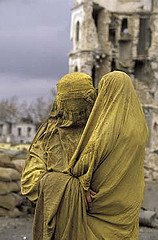
In some places, just a handful of insurgents can control a village. They rule by fear: beheading government sympathizers, blowing up bridges and demanding women wear all-encompassing burqas.

They have also set up a parallel administration with courts, taxes, patrols and checkpoints, according to lawmakers and officials. And they are suspected of burning scores of girls' schools.

In mid-December, Taliban fighters killed a young member of a Sufi-influenced Muslim group who had tried to raise a militia against them. The militants later dug up Pir Samiullah's corpse and hung it for two days in a village square - partly to prove to his followers that he was not a superhuman saint, a security official said on condition of anonymity.

A lawmaker and the senior Swat government official said business and landowners had been told to give two-thirds of their income to the militants. Some local media reported last week that the militants have pronounced a ban on female education effective in mid-January....

A Swat militant boasted that "we are doing our activities wherever we want, and the army is confined to their living places."

"They cannot move independently like us," said the man, who was reached over the phone and gave his name as Muzaffarul Haq. He claimed the Swat militants had no al-Qaida or foreign connections, but that they supported all groups that shared the goal of imposing Islamic law.

"With the grace of Allah, there is no dearth of funds, weapons or rations," he said. "Our women are providing cooked food for those who are struggling in Allah's path. Our children are getting prepared for jihad."

And yet most Pakistanis will tell you it is Americans and Indians who are the really bad guys. Go figure that one out.

Saturday, December 27, 2008

Taliban's education policy

The BBC reports

A local Taleban commander ordered parents to stop sending their daughters to school by 15 January.

In comments broadcast on an illegal radio station, he threatened to blow up schools which enrolled female students.

This year alone, Taleban militants have destroyed more than 130 schools in the Swat valley. They want to bring in Islamic sharia law in the region.

Militant attacks on schools in the region have deprived more than 17,000 students of education.

...

Although schools for girls have come under attack on numerous occasions in the past, this is the first time Taleban militants have issued a complete ban on girls attending them, the BBC's Ethirajan Anbarasan says.

A Taleban spokesman said the prohibition would remain in place unless and until Islamic sharia law was fully implemented in the region.

...

Those who can afford it have already moved out of the region, but the poor have no other option than keeping their daughters at home, our correspondent says.

No wonder all the Pakistanis in the border region are "pro-Taliban."


Friday, December 26, 2008

A story to cheer everyone up

If you read only one story this holiday season, make it this one.  At least watch the video.

Wednesday, December 24, 2008

Recession comparisons to keep in mind

Photo courtesy of Sebastian Rich (UNICEF)

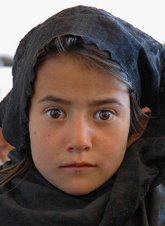
Take heart from the joy of this Afghan child.  According to UNICEF, 30 percent of primary school age children in Afghanistan work to support their families. 

Tuesday, December 23, 2008

Salang pass, Afghanistan

Jawad Jalali, UNAMA

Friday, December 19, 2008

A shoe-hurler connection to Saddam?

Salameh Nematt, former correspondent for Al-Hayat, writes in The Daily Beast:

Reports in the Arab media indicate that the Iraqi shoe thrower, Muntather al-Zaidi may have been planning his assault on President Bush for more than a year, helped by Iraqi Baathists seeking to overthrow the U.S,-backed government. One leading Arab website said the al-Zaidi’s handlers may have been funded by Raghad, the eldest daughter of former dictator Saddam Hussein.

Raghad, who currently lives in self-exile in Jordan, is wanted in Iraq for funding terrorism and for looting billions from state funds on the eve of the 2003 war that toppled her father.

Dia’ al-Kanani, the judge investigating the shoe-throwing incident, said Thursday he turned down a request to release al-Zaidi on bail for security reasons, including fear for the suspect’s own security. He said there was a real threat he may be attacked.

He continues reporting:

Contrary to reports in the American and Arab media, readers’ comments on Elaph.com showed that eight out of 10 Arabs who responded on that site condemned the shoe attack as a shameful and unprofessional act.
The Arab world’s leading political columnist, Hazem Saghia, writing in the London-based Al-Hayat daily newspaper, said Thursday it was “ironic that after living nearly a third of a century under Saddam Hussein’s boots, an Iraqi decides to throw his shoes at the person who removed Saddam from power.”
Saghia said that after all is said and done, “Bush came to Iraq, signed the security agreement he wanted, and left after casually taking note al-Zaidi’s show size. Thus, we’re even. He got what he wanted, and we’re left with shoes that missed their target. Perhaps we deserve to be ruled by someone like Saddam Hussein.”

Monday, December 15, 2008

The shoe-hurler as Every Arab

Jonah Goldberg comments:

First, the main reason "journalists" in Saddam's Iraq would never have thrown a shoe at a visiting dignitary is that they'd be tortured and executed for it. More importantly, can we just drop this fantasy-land nonsense that America was super-popular in the Mideast before George W. Bush came on the scene? I mean really, who is Reuters trying to kid?

Also, if someone throws a shoe at Barack Obama — at home or abroad — will that be used by the press to define Obama's popularity, never mind his legacy? I mean if some nutter in Holland hucks a clog at Obama, does that mean all of the Netherlands, never mind all of Europe, hates Obama? Somehow I doubt that's how Reuters et al would cover it. In a circumstance like that, we'll be told how this was an act by one lone-shoe-man.

There's a weird double standard buried deep in all of this, and I don't just mean the biases against Bush. When conservatives hold up unsavory Muslims or Arabs as representative of the region's problems, we're told how simplistic and two-dimensional we're being. But when the same sort of unsavory doofus behaves in ways that confirm liberal biases and coform to liberal passions, then suddenly this doofus speaks for millions.


And Michael Totten reminds of a point that should not be forgotten in all this (via  Katherine Lopez at The Corner):
Michael Totten just got back from Iraq. So I asked him about the shoe this morning: "The Bush shoe incident made me laugh slightly. Only because of the U.S. was an Iraqi journalist allowed to throw that shoe. On some level, he knows that. Tellingly, Prime Minister Maliki stepped in the way to protect the president, and many Iraqis in the room apologized for the offense."

Michael continued: "I have briefly met many Iraqi journalists in Baghdad. They seem like decent people, for the most part, and are not as shifty as many other civilians I encounter." He added: "In the Combined Press Information Center in Baghdad, where journalists are credentialed by the U.S. Army, is a poster showing the faces of all the journalists killed in Iraq last year. There are dozens of faces on that poster, and almost every single one of them is Iraqi. Iraqi journalists are very brave, much braver than I am, and I'd hate to see Americans get the wrong idea about these people from one lousy incident."
Update:  Iraq's permanent representative to the United Nations Feisal al-Istrabadi told a group of academics and journalists that Al-Bagdaddiya, the shoe-hurler's news station is a Baathist station.  Major newspapers are finally reporting that it is based out of Cairo. 

And finally, how did U.S. soldiers react to the news?  Here's one account via Campbell Robertson at the New York Times Baghdad Bureau blog:

“Hey you see George was hit with a shoe?” a soldier had asked Monday morning, laughing and lumping eggs into his plate in the kitchenette of the company’s security outpost.

“George who?”

And that was mostly it for Monday. By the middle of the day most had heard about it, on the Internet, from wives back home, but it was more or less dismissed with “I can’t believe that, that’s some funny stuff” (or so paraphrased, for this is a family blog).

Midway through Monday night’s patrol, Lt. Miller, one of the sergeants and the interpreter were standing in a kitchen trying to iron out a misunderstanding with a couple of nervous looking Iraqi men, when a burst of laughter came from the soldiers in the living room. The Shoe Throwing Incident was being shown on the Iraqi evening news, frequently, and in slow motion. The soldiers were guffawing and remarking on Prime Minister Nuri Kamal al-Maliki’s impressive attempt to block the second shoe. The Iraqis in the room stood in the back, unsmiling, as the throws were replayed, again and again. Then the news moved on to another story and the soldiers moved back out into the cold streets.

A few houses later, the last stop of the night, a little confrontation broke out when the women of the houses assumed the soldiers were robbers — their house had been broken into earlier this year — and began screaming. The owner of the house was angry but Lt. Miller calmed the man’s nerves, and they began the usual chat about the neighborhood.

I stayed out in the street, talking with the soldiers, who were discussing the wars or quiet lives that awaited them on the other side of this deployment. Soon Lt. Miller appeared and we moved on.

The next day, Lt. Miller told me that, out of nowhere, the man in the last house had announced that he wanted to apologize for the Shoe Incident, insisting that it not reflect poorly on all Iraqis.

I asked Lt. Miller what he said in return. He assured the man that it was OK, that they do not consider one Iraqi’s behavior indicative of the country, that this was what democracy can look like, etc.

And, he said, “I told him that a lot of the soldiers thought it was pretty funny."


Wednesday, December 10, 2008

Be careful what you ask for

KSM, the mastermind of the 9/11 attacks, 
at the time of his arrest. Courtesy of Abdul Arts.

Here he is depicted in a recent courtroom sketch by Janet Hamlin.

Khalid Sheikh Mohammad, otherwise known as KSM, the mastermind of the 9/11 attacks, and four co-defendants want the U.S. military tribunal to accept their guilty pleas. They told the judge that since  they don't trust any of their representatives - because they are American, of course - they don't want to waste the courts time and should just be convicted.

Observers say that what they are doing here is trying to challenge the U.S. to turn them into martyrs by putting them to death.

Will this work?  Will people really will be impressed by such martyrdom? If you are somebody who would buy into this program, email me and tell me why.  Or alternatively, just turn yourself into your local law enforcement agency.
Posted by Picasa

Monday, December 8, 2008

"Another invasion"


See this special issue by South Asia Defence & Strategic Review, out of Delhi.

"A calamity has fallen on my house. What shall I do?"

Thus spoke Shameem Khan, an Indian Muslim whose six relatives were shot dead by the Mumbai attackers.  He was quoted by Patrick French in an op-ed in today's New York Times about the Mumbai attacks.  


Mr. French, to give you some context here, is the author of "The World is What It Is: The Authorized Biography of V.S. Naipaul."  The book, described by George Packer as a "portrait of the artist as a monster" is also, he writes, "a magnificent tribute to the painful and unlikely struggle" of Naipaul, a Trinidadian of Indian descent who "made himself into the greatest English novelist of the past half century."  In other words, Mr. French is not someone who blurs the hard edges of those he writes about.  

So let's see what he has to say about the attacks. 

AS an open, diverse and at times chaotic democracy, India has long been a target for terrorism. From the assassination of Mohandas Gandhi in 1948 to the recent attacks in Mumbai, it has faced attempts to change its national character by force. None has yet succeeded. Despite its manifest social failings, India remains the developing world’s most successful experiment in free, plural, large-scale political collaboration.

Mr. French continues:

When these well-planned attacks unfolded, it was clear to anyone with experience of India that they were not homegrown, and almost certainly originated from Pakistan. Yet the reaction of the world’s news media was to rely on the outmoded idea of Pakistan-India hyphenation — as if a thriving and prosperous democracy of over a billion people must be compared only to an imploded state that is having to be bailed out by the I.M.F. Was Pakistan to blame, asked many pundits, or was India at fault because of its treatment of minority groups?

The terrorists themselves offered little explanation, and made no clear demands. Yet even as the siege continued, commentators were making chilling deductions on their behalf: their actions were because of American foreign policy, or Afghanistan, or the harassment of Indian Muslims. Personal moral responsibility was removed from the players in the atrocity. When officials said that the killers came from the Pakistani terrorist group Lashkar-e-Taiba, it was taken as proof that India’s misdeeds in the Kashmir Valley were the cause.

These misdeeds are real, as are India’s other social and political failings (I recently met a Kashmiri man whose father and sister had died at the hands of the Indian security forces). But there is no sane reason to think Lashkar-e-Taiba would shut down if the situation in Kashmir improved. Its literature is much concerned with establishing a caliphate in Central Asia, and murdering those who insult the Prophet. Its leader, Hafiz Saeed, who lives on a large estate outside Lahore bought with Saudi Money, goes about his business with minimal interference from the Pakistani government.

Lashkar-e-Taiba is part of the International Islamic Front for Jihad Against Jews and Crusaders (the Qaeda franchise). Mr. Saeed’s hatreds are catholic — his bugbears include Hindus, Shiites and women who wear bikinis. He regards democracy as “a Jewish and Christian import from Europe,” and considers suicide attacks to be in accordance with Islam. He has a wider strategy: “At this time our contest is Kashmir. Let’s see when the time comes. Our struggle with the Jews is always there.” As he told his followers in Karachi at a rally in 2000: “There can’t be any peace while India remains intact. Cut them, cut them — cut them so much that they kneel before you and ask for mercy.” In short, he has an explicit political desire to create a state of war between the religious communities in India and beyond, and bring on the endgame.

Like other exponents of Islamist extremism, he has a view of the world that does not tolerate doubt or ambiguity: his opponents are guilty, and must be killed. I have met other radicals like Mr. Saeed, men who live in a dimension of absolute certainty and have contempt for the moral relativism of those who seek to excuse them. To achieve their ends, it is necessary to indoctrinate boys in the hatred of Hindus, Americans and Jews, and dispatch them on suicide missions. It is unlikely that any of the militants who were sent from Karachi to Mumbai — young men from poor rural backgrounds whose families were paid for their sacrifice — had ever met a Jew before they tortured and killed Rabbi Gavriel Holtzberg and his wife, Rivka, who was several months pregnant, at the Mumbai Jewish center.

What to do?  Here's what Mr. French would do:

The prime solution to the present crisis is to force the closing of terrorist training outfits in Pakistan, and apply the law to those who organize and finance operations like the Mumbai massacres. Hafiz Saeed and other suspects should be sent to India to stand trial. The remark by Pakistan’s president, Asif Ali Zardari (a man whose history of shady business dealing makes him demonstrably unfit for high, or even low, office), that he did not think the terrorists came from Pakistan would be funny if it were not tragic.

The United States gives around $1 billion a year in military aid to Islamabad; that is leverage. It does the people of Pakistan no favors for Washington to allow their leaders to continue with the strategy of perpetual diversion, asking India to be patient while denying the true nature of the immediate terrorist threat. I received this e-mail message recently from a friend in Karachi: “Nowhere can get more depressing than Pakistan these days — barring some African failed states and Afghanistan.”

Sunday, December 7, 2008

Meanwhile in Pakistan there is widespread denial...but in the most unexpected places, a different reaction

The New York Times reports:

From Taliban commanders in the northwest to liberal businessmen in Islamabad, the capital, Pakistanis have this week been rallying around the flag. . .

"We may have a dispute with the Pakistan government, but we would set aside our differences if our homeland was threatened by outside powers," said Maulvi Nazir, head of a powerfulPakistani Taliban splinter group in the tribal area of South Waziristan. "We would raise a force of 15,000 tribal Taliban to fight on the side of Pakistan's armed forces. We would infiltrate 500 suicide bombers into India to cause havoc there."

That promise of assistance has not gone unnoticed in Islamabad.

In a briefing with reporters after the Mumbai attacks, several top officials of Pakistan'sInter-Services Intelligence agency, or ISI, said they welcomed the offers of support from Nazir and Taliban leaders such as Baitullah Mehsud.

Only a year ago, Mehsud, who reportedly commands thousands of foot soldiers in his native South Waziristan, was Pakistan's most wanted man. Days after the assassination of former Pakistani prime minister Benazir Bhutto, Mehsud's name surfaced as the possible perpetrator of the Dec. 27 bomb attack that killed her.

The story does not end here (fortunately). As the Times went on to report, there's a story behind this story. Quoting one Rahimullah Yusufzai, a Pakistani journalist based out of Peshawar, the capital of the North-West Frontier Province and the administrative center of the Federally Administered Tribal Areas of Pakistan - a.k.a. Taliban country - the Times continued:

"Right now, these are only statements. They are offering support, but they are also saying that in return for their support the military must stop its operations in the tribal areas, in Swat and other places," Yusufzai said. "They are trying to seize the moment and say, 'Look we're not anti-state, not anti-Pakistan.' But the government has to be careful. It should not respond by pulling out troops."

Many ordinary people in northwestern cities such as Peshawar are wary of expressions of national unity and more inclined to empathize with India's position, Yusufzai said. Hundreds of civilians have been killed and wounded in insurgent attacks this year, and the mounting violence has sensitized the population to the government's failure to rein in terrorists within Pakistan.

"There is a feeling that these jihadi groups need to be cut down to size," Yusufzai said. "People here have seen up close the results of their activities, so they are probably more inclined to believe some of the Indian accusations."

Saturday, December 6, 2008

Sunday, November 30, 2008

"Unbreakable" India


Both photos courtesy of http://arunshanbhag.com


Tuesday, October 28, 2008

Signs of hope in Afghanistan????????

Pakistani Dawn News TV reports today:

The mini jirga [tribal convention] of Pakistan and Afghanistan has agreed to form a committee to make contact with, what it calls, opposition in both countries for peace and reconciliation.

The Afghan delegation to the jirga was led by Dr. Abdullah Abdullah, former Foreign Minister in the Karzai administration and Board Advisor to Kabul Center for Strategic Studies, the think tank I work for in Afghanistan.

The Dawn report continues:

Dr Abdullah Abdullah, said both sides agreed to improve cooperation in the fight against terrorism. It has recommended to governments in Pakistan and Afghanistan to deny sanctuaries for terrorists, which are a threat to both parties.

Abdullah said that the jirga delegates have also recommended to expedite the process of peace and reconciliation in the region.

Abdullah's counterpart from Pakistan, Awais Ahmed Ghani, told the media that they will form a committee to establish contacts with, what he called, opposition to bring lasting peace in the region.

When asked to clarify the term opposition, Mr Ghani said that the it includes all those elements involved in the conflict.

Let's hope the time has come that ALL parties are ready to lay down their arms and come to the table.

Note to "opposition": You have nothing to lose by negotiating but more lives. Make Allah proud (for a change.)

Monday, October 27, 2008

Kabul Center advisor leads Afghan-Pak peace delegation in tribal areas

Kabul Center for Strategic Studies board member Dr. Abdullah Abdullah, the former Foreign Minister of Afghanistan, is leading the Afghan delegation to the mini-jirga that began meetings today to discuss ways to bring about peace in the tribal areas that span the borders of Afghanistan and Pakistan. (Full disclosure: I serve as the American Office of Kabul Center.)
Both countries and the U.S. have indicated that they are willing to reconcile with the Taliban provided they are willing to respect basic law and lay down their arms.
As an Afghan delegate Farooq Wardak told reporters: "Those who want to fight, I think they are the common enemy of the people of Afghanistan and Pakistan. We have to coordinate our military strategy, fight them in a coordinated manner."

Sunday, October 12, 2008

Things are not that bad in Afghanistan

In case you missed this report: straight from the New York Times:

Less than 12 hours after NATO troops in Afghanistan defeated an ambitious attempt by the Taliban to storm a provincial capital in the far southwest, killing dozens of the fighters, the top American commander in the country urged doubters Sunday to believe that the war against the Taliban would be won.

The commander, Gen. David D. McKiernan, who leads more than 65,000 troops from about 40 foreign countries, including 33,000 Americans, said at a news conference in Kabul that there had been “too many” reports in the media recently asserting that the foreign forces and their Afghan allies were losing the war.

“I absolutely reject that idea, I don’t believe it,” the general said, adding: “It is true that there are many places in this country that don’t have an adequate level of security. We don’t have progress as even and as fast as any of us would like. But we are not losing in Afghanistan.”

At another point, he was more emphatic. There are major challenges facing the war effort, he said, “But we will win.”

Before you bet against the U.S., NATO, or the Afghan forces, you check out the full report.


Saturday, October 11, 2008

Why are the Taliban blowing up the tribals?

Aren't they supposed to be allies in this war?
Well, no, actually. The reality is far different: From what my Afghan colleagues at Kabul Center for Strategic Studies tell me, the vast majority of Pakistan's supposedly ignorant and extremist tribals hate the Taliban. If most people in the West still don't understand this fundamental dynamic, the Taliban certainly gets it. Hence we see the motive for their hideous bombing yesterday. From The New York Times report:
A suicide bomber detonated a vehicle laden with explosives during a meeting of elders in Pakistan’s tribal territories on Friday, killing more than 40 people and wounding more than 100, according to a government official, television accounts and witnesses.

Elders in the Orakzai tribal area, vowing to push Taliban extremists out of their area, were planning the details of how to wipe out a Taliban headquarters, said Kamran Zeb, the government’s senior official in Orakzai.

And as the Times report goes on to report:

In another harsh move, Taliban fighters kidnapped four tribal elders from Bajaur and then beheaded them after they attended a pro-government meeting in the Charmung district of Bajaur, local news reports said Friday.

And the walls came tumbling down

Reporting from Baghdad, the New York Times:

Market by market, square by square, the walls are beginning to come down. The miles of hulking blast walls, ugly but effective, were installed as a central feature of the surge of American troops to stop neighbors from killing one another.

“They protected against car bombs and drive-by attacks,” said Adnan, 39, a vegetable seller in the once violent neighborhood of Dora, who argues that the walls now block the markets and the commerce that Baghdad needs to thrive. “Now it is safe.”

Saturday, September 27, 2008

Tribal awakening in Pakistan

According to the London Guardian, it's happening:

Moderate tribesmen in parts of militant-ravaged north-west Pakistan are challenging Taliban extremists threatening to overrun their area, in what could develop into a mass resistance movement.

Villagers in parts of North-West Frontier province and the tribal territory, faced with the violent advance of the Pakistani Taliban, are starting to organise an armed indigenous resistance in the absence of help from the state.

The resistance has parallels with the "Sunni awakening" in Iraq, where tribesmen took on al-Qaida militants in Anbar province and elsewhere.

The Pakistani movement relies on tribal customs and widespread ownership of guns to raise traditional private armies, known as lashkars, each with hundreds or several thousand volunteers.

These tribal armies cannot stop individual acts of terrorism, like the devastating suicide bombing of the Marriott hotel in Islamabad last week that killed more than 50 people. But they aim to stop the development of an extremist mini-state in the north-west.

The lashkars are appearing in many areas, including Bajaur, in the tribal zone, and Dir and Buner in North-West Frontier province. The Taliban are heavily armed and entrenched in a line that runs along the Afghan border from South Waziristan, north through Bajaur and Mohmand, in the tribal area, and in adjacent districts in NWFP, including Swat.

"There's going to be a civil war, " said Asfandyar Wali Khan, leader of the Awami National party, which runs the provincial government in NWFP. "It will be the people versus the Taliban."

If you are wondering where the Pakistani army is, the tribes have asked them not to come:

...saying that the presence of uniformed men only galvanised the Taliban and provided them with ready targets. The army has agreed.


Sunday, September 21, 2008

Hitchen's reviews the left

In his review of Bernard-Henri Levi, the very public French intellectual's new book Left in Dark Times: A Stand Against the New Barbarism, Hitchens offers his own critique of the left.

First he sums up what he believes is BHL's political view: he is not only anti-fascist but also anti-totalitarian. In his book, Hitchens writes, BHL shows:

...how agonized he is by leftist compromises with every disgraced regime and ideology from Slobodan Milosevic to Islamic jihadism, but the effort expended is worthwhile and shows some of the scars of political warfare from Bangladesh to Bosnia. He is much readier to defend Israel as a democratic cause than are most leftists and many Jews, but he was early in saying that a Palestinian state was a good idea, not because it would appease Arab and Muslim grievances but for its own sake. (This distinction strikes me as both morally and politically important.)

He then goes on to quote BHL directly:
“I’m convinced that the collapse of the Communist house almost everywhere has even, in certain cases, had the unexpected side effect of wiping out the traces of its crimes, the visible signs of its failure, allowing certain people to start dreaming once again of an unsullied Communism, uncompromised and happy.”

And of course he adds his own (worthwhile) comments:
If this is not precisely true, even of those nostalgic for “Fidel,” apologetic about Hugo Chávez, credulous about how “secular” the Baath Party was, or prone to sympathize with Vladimir Putin concerning the “encircling” of his country by aggressive titans like Estonia and Kosovo and Georgia, still it does contain a truth. One could actually have gone further and argued that the totalitarian temptation now extends to an endorsement of Islam­ism as the last, best hope of humanity against the American empire. I could without difficulty name some prominent leftists, from George Galloway to Michael Moore, who have used the same glowing terms to describe “resistance” in, say, Iraq as they would once have employed for the Red Army or the Vietcong. Trawling the intellectual history of Europe, as he is able to do with some skill, Lévy comes across an ancestor of this sinister convergence in a yearning remark confided to his journal by the fascist writer Paul Claudel on May 21, 1935: “Hitler’s speech; a kind of Islamism is being created at the center of Europe.”


Putting this latest work in context, Hitchens writes:
In his last book, a retracing of Tocque­ville’s “Democracy in America,” Lévy appeared in the role of mediator at a time when French-American relations were in a sorry condition. Here, too, he takes a stand against the mindless anti-Americanism that is so prevalent among the lumpen intellectuals of Europe. In his view, the phenomenon has two highly unpleasant subtexts to it. The first is envy and resentment, deriving from the fact that the United States has several times intervened to save Europe from itself and from the consequences of its ideological dementias. The second, perhaps not unrelated, is a no-less-envious perception of America as a handmaiden and vassal of the Jews.


And for those who will probably not read BHL's book (me, for example), Hitchens reveals his ultimate prescription for how the Left can fix itself. In Hitchens' words:
The left, he insists, must renounce any version of ultimate or apocalyptic history, along with any mad schemes to create heaven on earth. A secular, pragmatic humanism will be quite demanding enough, thank you.

Friday, September 19, 2008

A counterinsurgency plan for Afghanistan that might work

Thomas H. Johnson and M. Chris Mason make a compelling case for reempowering the tribal councils in Afghanistan in the October issue of the Atlantic Monthly.

First they note an important historical detail:

As the Russian ambassador to Afghanistan, Zamir Kabulov, noted in a blunt interview with the BBC in May, the current military engagement is also beginning to look like the Soviets’ decade-long Afghan adventure, which ended ignominiously in 1989. That intervention, like the current one, was based on a strategy of administering and securing Afghanistan from urban centers such as Kabul and the provincial capitals. The Soviets held all the provincial capitals, just as we do, and sought to exert influence from there. The mujahideen stoked insurgency in the rural areas of the Pashtun south and east, just as the Taliban do now.

The U.S. engagement in Afghanistan is foundering because of the endemic failure to engage and protect rural villages, and to immunize them against insurgency. Many analysts have called for more troops inside the country, and for more effort to eliminate Taliban sanctuaries outside it, in neighboring Pakistan. Both developments would be welcome. Yet neither would solve the central problem of our involvement: the paradigm that has formed the backbone of the international effort since 2003—extending the reach of the central government—is in fact precisely the wrong strategy.

Then they provide the context for why securing the cities doesn't seem to work:

Politically and strategically, the most important level of governance in Afghanistan is neither national nor regional nor provincial. Afghan identity is rooted in the woleswali: the districts within each province that are typically home to a single clan or tribe. 

And zeroing in on the heart of the insurgency, the authors write:

The rural Pashtun south has its own systems of tribal governance and law, and its people don’t want Western styles of either. But nor are they predisposed to support the Taliban, which espouses an alien and intolerant form of Islam, and goes against the grain of traditional respect for elders and decision by consensus. Re-empowering the village coun cils of elders and restoring their community leadership is the only way to re-create the traditional check against the powerful political network of rural mullahs, who have been radicalized by the Taliban. But the elders won’t commit to opposing the Taliban if they and their families are vulnerable to Taliban torture and murder, and they can hardly be blamed for that.

They then propose a plan:

... the U.S. needs to fundamentally reconfigure its operations, creating small development and security teams posted at new compounds in every district in the south and east of the country. This approach would not necessarily require adding troops, although that would help—200 district-based teams of 100 people each would require 20,000 personnel, one-third of the 60,000 foreign troops currently in the country.

Each new compound would become home to roughly 60 to 70 NATO security personnel, 30 to 40 support staff to manage logistics and supervise local development efforts, and an additional 30 to 40 Afghan National Army soldiers. The troops would provide a steady security presence, strengthen the position of tribal elders, and bolster the district police. ....regular contact at the district and village levels would greatly improve the collection and analysis of intelligence.

Perhaps most important, district-based teams would serve as the primary organization for Afghan rural development.

Local teams with on-site development personnel—“District Development Teams,” if you will—could change all that, and also serve to support nonmilitary development projects. State Department and USAID personnel, along with medics, veterinarians, engineers, agricultural experts, hydrologists, and so on, could live on the local compounds and work in their districts daily, building trust and confidence.

...As long as the compounds are discreetly sited, house Afghan soldiers to provide the most visible security presence, and fly the Afghan flag, they need not exacerbate fears of foreign occupation. Instead, they would reinforce the country’s most important, most neglected political units; strengthen the tribal elders; win local support; and reverse the slow slide into strategic failure.

Can this really be true?

Are things really this bad in Saudi?  Did President Bush really become a "locus of hope for Saudi women"?  From today's NYT's story on how Oprah delivers daily solace to Saudi women?  From a mother of five in Riyadh:

“Many of us feel that the solutions for our problems have to come from outside,” Ms. Muhammad said. When President Bush visited Saudi Arabia in January, she continued, as an example, his presence briefly became a locus of hope for Saudi women. “A lot of women were saying that they wished they could talk to Bush about problems like forced marriage, about how our children are taken away if our husbands divorce us.”

Monday, September 15, 2008

McCain on the War on Terror

According to Jeffrey Goldberg in the latest issue of The Atlantic:

McCain calls Terror and Consent “the best book I’ve ever read on terrorism.
Goldberg says Henry Kissinger recommended the book. As Goldberg reports:
Kissinger, a foreign-policy “realist,” embraces [the author, Philip] Bobbitt’s argument that the so-called Bush Doctrine is “incoherent” because its call for the democratization of Arab states undermines another of its principles, the need to “preclude” states from acquiring weapons of mass destruction. . .
The most controversial of Bobbitt’s assertions is that the absence of actual stores of weapons of mass destruction in Iraq does not undermine the need for America to “preclude”—he prefers preclude to preempt—certain countries from developing WMDs in the future.

As Bobbit writes in the book:
The war against a global terror network, al Qaeda, is in an early phase. Yet already owing to the Coalition invasion of Iraq, terrorists from this network or any other cannot someday call on Saddam Hussein to supply them covertly with weapons with which to attack the West when he would not have dared to have done so directly, and when he, but not they, had the resources to buy into a clandestine market in WMD.

According to Goldberg:
McCain believes strongly that the only way to ensure Saddam would never pose a threat to American interests was to remove him from power. “Is there anyone who believes that Saddam Hussein wouldn’t have pursued WMD?” he asked me. “He told his interrogators he would. Is there anybody who believes that the sanction regime was going to hold, or that the status quo would hold, or that sooner or later they wouldn’t shoot down one of our planes patrolling the no-fly zone?”

Goldberg claims that this comment is identical to what McCain told him around the time he originally voted to use military force against Iraq:
“There is no such thing as containment,” he said then. “If we don’t act, we’ll pay the price later. If we ‘give peace a chance,’ Saddam will pursue his ambitions against us, but he will be more powerful, and more deadly than ever.”

As Goldberg continues:
I asked Kissinger whether he thinks that McCain can be too inflexible on the subject of preemption. He said McCain will not change his mind if he feels that the nation’s defense is at stake. Much of this, Kissinger continued, is related to McCain’s sense of national honor, and personal honor. “He will not do the easy thing,” he said. . .

McCain’s father, Kissinger said, saw the world the same way McCain sees it. “He was a military man, not a diplomat. Both men grasp the notion of consequences. From about 1967 on, we were experiencing a national trauma, with obsessive doubts about the fitness of government and with a yearning to just get out of Vietnam and get it over with, with a refusal to look at the consequences. Both of them understood that withdrawal without honor has costs. The son knows this from his own experience and from his father.”
Goldberg goes on to try and assess what McCain will do with respect to Iran:
The most plausible target of a McCain-ordered preemptive war would be Iran. In January 2006, he said, “There’s only one thing worse than the United States exercising the military option—that is a nuclear-armed Iran. The military option is the last option, but cannot be taken off of the table.”

Goldberg writes that McCain described to him, after he said this, a scenario which would, in his view, trigger a preemptive strike against the Islamic Republic:
“If we knew with absolute certainty that the Iranians were going to support Hezbollah to make sure they got a weapon of mass destruction in southern Lebanon—would we just wait until Hezbollah attacks Israel with that weapon? Well, first of all, I don’t think the Israelis would wait, but I’m not sure. The consequences, as we know, are catastrophic.” (In May, when I asked McCain why the defense of Israel was an American national-security interest, he said, “The United States of America has committed itself to never allowing another Holocaust.”)
McCain, says Goldberg, is aware that his position here is not necessarily popular:
“With preemption, the connotation is that the cowboy just wants to go out and attack people,” he said. “The country is in one of our occasional periods of isolationism, a reaction to what [the public views] as failure, even when we are succeeding in Iraq—and we have succeeded in Iraq. There’s still going to be a greater reluctance than there was” before the Iraq War to try to stop an adversary from gaining possession of weapons of mass destruction.

As he said this, he seemed depleted by the discussion of preemption. It’s not the first unpopular cause he’s adopted, but it might be the most difficult one to sell to the American public.

“It’s very hard to run for president on this idea right now.”

Saturday, September 13, 2008

What is the Bush Doctrine?

It turns out Alaskan Governor and Republican VP nominee Sarah Palin isn't such an idiot after all.  Check out this Washington Post analysis - on Page One, no less.  

Sunday, August 3, 2008

Guide to Elections 2008

Send a JibJab Sendables® eCard Today!

Saturday, July 19, 2008

Time for a refresher course: How to avoid making mistakes in understanding events of the past

From Ibn Khaldun in "An Arab Philosophy of History" translated and arranged by Charles Issawi. Though this was written sometime in the the late 1370s, it is as relevant today as it must have been then.

All records, by their very nature, are liable to error....

The first of these is partisanship towards a creed or opinion. ....should the mind...be biassed in favour of an opinion or creed, it at once accepts every favourable piece of information concerning this opinion. Therefore, partisanship acts as a blinker to the mind, preventing it from investigating and criticizing and inclining it to the reception and transmission of error.

The second factor conducive to error is over-confidence in one's
sources. Such sources should be accepted only after thorough investigation involving the criticism of falsehoods and the correction of distortion.

A third factor is the failure to understand what is intended. Thus many a chronicler falls into error by failing to grasp the real meaning of what he has seen or heard and by relating the event according to what he thinks or imagines.

A fourth source of error is a mistaken belief in the truth. This happens often, generally taking the form of excessive faith in the authority of one's sources.

A fifth factor is the inability rightly to place an event in its real
context, owing to the obscurity and complexity of the situation. The chronicler contents himself with reporting the event as he saw it, thus distorting its significance.

A sixth factor is the very common desire to gain the favour of those of high rank, by praising them, by spreading their fame, by flattering them, by embellishing their doings and by interpreting in the most favourable way all their actions.


The seventh cause of error, and the most important of all, is the
ignorance of the laws governing the transformations of human society. For every single thing, whether it be an object or an action, is subject to a law governing its nature and any changes that may take place in it. If, therefore, the historian understands the nature of events and of changes that occur in the world, and the conditions governing them, such knowledge will help him more than anything else to clarify any record and to distinguish the truths it contains from the falsehoods. . . .

. . . Another cause of error is exaggeration. . . . Thus we find that most of our contemporaries give free rein to their imagination, follow the whisperings of exaggeration, and transgress the limitations of customary experience, when speaking of the armies of contemporary states, or of states which existed in the recent past; or when discussing the troops of Muslim or Christian nations; or when enumerating the revenues of kings, or the taxes or dues levied by them; or when estimating the expenditure of the wealthy, or the fortunes of the rich....


The real cause of this error is that men's minds are fond of all that is strange and unusual, and that the tongue easily slips into exaggeration, while the investigator and critic is apt to overlook things, so that he does not try to check his statements or weigh them up in a fair and critical spirit of enquiry and investigation, but rather gives his imagination a free rein and lets his tongue loose in a pasture of falsehoods. . . .

Who could have guessed...given all the reportage

Melik Kaylan, a refugee from Saddam's Iraq, writes in the Wall Street Journal:

A recent mission to Iraq headed by top archaeologists from the U.S. and U.K. who specialize in Mesopotamia found that, contrary to received wisdom, southern Iraq's most important historic sites -- eight of them -- had neither been seriously damaged nor looted after the American invasion. This, according to a report by staff writer Martin Bailey in the July issue of the Art Newspaper.

As Malik goes on to report:

Up to now, it had seemed a clear-cut case. It stood to reason that a chaotic land rich with artifacts would be easy to loot and plunder. Ergo, the accusations against the U.S., the de facto governing authority, had been taken on faith. No one had bothered to challenge the reports, the evidence or the logic, not least because many ancient sites were in hostile terrain and couldn't be double-checked.

But as Malik duly notes:
When looters attacked the Baghdad Museum in 2003, the news media put the number of destroyed and looted objects at 170,000 -- a figure equal to the entire collection. It emerged later that most of the important pieces had been successfully hidden away. Others were soon found. The number of missing objects that is cited has since fluctuated between 3,000 and 15,000, with the figure never taking into account the systematic semiofficial looting and frequent substituting with fakes that occurred in Saddam's time.

So what did archeologists find on this latest trip? According to Malik who quotes the Art Newspaper article:
"The international team . . . had been expecting to find considerable evidence of looting after 2003 but to their astonishment and relief there was none. Not a single recent dig hole was found at the eight sites, and the only evidence of illegal digging came from holes which were partially covered with silt and vegetation, which means they [were] several years old." Furthermore, the most recent damage "probably dated back to 2003," to just before and after the invasion when the Iraqi army maneuvered for the allied attack. (According to other experts, looting probably took place when the Iraqi army first moved out of areas near sites to counter the invasion.)

So how, you ask,did the facts on the ground get so distorted? According to Malik:

In phone conversations with me, both Donny George and Lawrence Rothfield argued that the eight sites were all known to be well-protected. ...But Dr. George, perhaps the world's leading authority on the subject, also conceded that the greatest damage done by looters had generally occurred in the 1990s, in
Saddam's time. Prof. Rothfield said that the no-fly zones back then had allowed illicit digging to occur...

[Or as the Art Newspaper reported:]The upshot seems to be that] "little damage was . . . caused by coalition forces." Much of it was done by Saddam's forces.

Tuesday, June 17, 2008

Index of good news

USA Today reports:

European and Asian companies are beating their American rivals into Iraq now that security has improved the investment climate, Iraq and U.S. officials say.

"It's starting to turn … and the people who are getting in on the ground floor are not American," said Paul Brinkley, the Pentagon official who is leading U.S. efforts to help Iraq rebuild its economy. "It's ironic."

Foreign companies, including U.S. investors, have committed to deals worth about $500 million so far this year and Brinkley expects at least $1 billion in foreign investment by the end of the year.

Thursday, June 12, 2008

Duh - Rand Report April 2008

This Rand conclusion in the recent released "Counterinsurgency in Afghanistan" seems almost too intuitively obvious to post but given the lack of confidence in common sense -in spite of the fact is is often so much more sensible than "expert" advice - I post it anyway:

...the most successful information operations were from indigenous actors such as religious, tribal, and political leaders - often without U.S. assistance.

Tuesday, June 10, 2008

"Catastrophic success" in Afghanistan?


That is how a recent operation by Company C of the 24th Marine Expeditionary Unit is being characterized. Today's NYT reports:
The district of Garmser, a fertile valley along the Helmand River, had been under control of the Taliban and members of Al Qaeda for most of the last two years and much of it had become a war zone, as the Taliban traded fire with British troops based in the district center. One of the largest poppy-growing areas in the country, Garmser District has been an important infiltration route for the insurgents, sending weapons and reinforcements to the north and drug shipments to the south to the border with Pakistan.
And check this out:

But Company C served in Anbar Province, once one of the most intractably violent areas of Iraq, which quieted last year under a new strategy of empowering local groups called Awakening Councils, which now provide security.

The marines were confident they could put that experience to good use here.
Only when you win over a critical balance of the local population and empower them to stand up to the insurgents can you turn the situation around, several marines said.
First Lt. Mark Matzke led a platoon for nine months last year in the Anbar city of Ramadi, where he said he got to know every character in a small neighborhood, both the troublemakers and the power brokers. But it was only when he sneaked in after dark and listened to people’s grievances in private that he was able to work out a strategy for protecting them from the insurgents.

“Through listening to their grievances, you could figure out that the people did not like the insurgents,” he said. But their biggest fear was that the marines would pull out, he said, leaving them at the mercy of insurgents who would treat them as collaborators.

As trust was built up, the people began to side with the marines and started to tip them off about who the insurgents were and where to find them. “You just need to give them confidence,” he said.

Villagers are still skeptical about how long the situation will last as the NYT goes on to report:

“I don’t think I will go back until complete peace and security comes,” said one elder, who said he had heard his house had collapsed under bombardment. “This is not the first time we have suffered. Several times we have seen such operations against the Taliban, and after some time the forces leave the area and so the Taliban find a way to return.”

“If NATO really wants to bring peace and make us free from harm from the Taliban,” he said, “they must make a plan for a long-term stay, secure the border area, install security checkpoints along the border area, deploy more Afghan National Army to secure the towns and villages, and then the people will be able to help them
with security."

Here's an offer that bears consideration

A leader of the tribal revolt against Al Qaeda in Iraq told The New York Sun that he would be happy to send military advisors to Afghanistan. The NY Sun continues:

Sheik Ahmad al-Rishawi told The New York Sun that in April he prepared a 47-page study on Afghanistan and its tribes for the deputy chief of mission at the American embassy in Kabul, Christopher Dell.

...The success of the Anbari tribal rebellion known as the awakening spurred Multinational Forces Iraq to try to emulate the model throughout Iraq, including with the predominately Shiite tribes in the south of the country.

..."Al Qaeda is an ideology," Sheik Ahmad said. "We can defeat them inside Iraq and we can defeat them in any country."

...Of his meeting with Mr. Bush, Sheik Ahmad said he was impressed. "He is a brave man. He is also a wise man. He is taking care of the country's future, the United
States
' future. He is also taking care of the Iraqi people, the ordinary people in Iraq. He wants to accomplish success in Iraq."

...In Washington, Sheik Ahmad also met with some members of Congress. He said he told them that American soldiers should stay in Iraq for at least as long as it takes to rebuild Iraq's national army. The Democratic majority in Congress has tried and failed to mandate deadlines for the withdrawal of American troops from Iraq regardless of conditions on the ground.

"We have to rebuild a national Iraqi army, not built on sects, but the same way they built up the Anbar police," he said. "They must be well-armed, so they will be able to protect the country and all the American interests in the area. We also have to make a friendship treaty based on mutual respect between the two parties, and then the United States will be able to withdraw from Iraq, if they wish, and we will succeed in Iraq the same way America succeeded in Japan and Germany."

..."We fully trust the Americans. We know the United States never in its history occupied a country. On the contrary, they were occupied and they were able to fight the occupier," he said, referring to the American rebellion against the British in 1776.

Tuesday, June 3, 2008

Taliban fleeing Afghanistan to....Guess where

The New York Times reports:

Marines of the 24th Marine Expeditionary Unit have been clearing Taliban and foreign fighters from the district of Garmser, in southern Helmand Province, an
important infiltration and drug trafficking route used by the Taliban to supply
insurgents farther north.

“The insurgents, after experiencing these several weeks of pressure below Garmser, are trying to flee to the south, perhaps to go back to the sanctuaries in another country,” said the NATO commander, Gen. Dan K. McNeill.

He did not name Pakistan, but Helmand Province shares a border with Pakistan, and the Taliban and drug traffickers have long used refugee camps across the border as a sanctuary from American firepower.

And look:

Governor Mangal said hundreds of foreign fighters had joined the Taliban in
their fight against marines in Garmser in recent weeks.

But he said they had suffered heavy losses.
Nineteen bodies of foreign fighters were found in one location, he said.

Alas the news is not entirely good given that "close by" places have decided to appease terrorists by offering them safe haven and in Afghanistan, the opium lords still reign. As the Times report continued:

General McNeill, who hands over command of NATO forces in Afghanistan this week
after 16 months in the post, said that if the Taliban and foreign insurgents continued to enjoy free sanctuary outside Afghanistan, their numbers would continue to grow.

He also seemed to warn Pakistan to contain the threat emanating from its land.
“If there are insurgencies in places that are not in Afghanistan, but very close by, and security forces are not taking them on, I don’t think that bodes well for the whole region,” General McNeill said.

Despite the rout of Taliban forces, the general warned that they were not the only problem in Helmand Province and that the enormous opium crop and the powerful drug business posed a comparable threat to Afghanistan’s stability.

Monday, June 2, 2008

Is the Taliban winning or losing?

The London Telegraph quotes the commander of the British forces in Afghanistan, Brig Mark Carleton-Smith:

The new "precise, surgical" tactics have killed scores of insurgent leaders and made it extremely difficult for Pakistan-based Taliban leaders to prosecute the campaign, according to Brig Mark Carleton-Smith....

Taliban fighters are apparently becoming increasingly unpopular in Helmand, where they are reliant on the local population for food and water.

"I can therefore judge the Taliban insurgency a failure at the moment," said Brig Carleton-Smith. "We have reached the tipping point."
Telegraph report suggests that the insurgency is running out of so much juice in Afghanistan, it has to be fought by foreigners:
The number of Afghans involved in the insurgency has also fallen, with increasing numbers of Pakistanis, Chechens, Uzbeks and Arabs found dead on the battlefield.

Now how does the NY Times sees the situation? Today's headline: "Taliban Leader Flaunts Power Inside Pakistan" gives us a clue. As the lead paragraphs continue:
With great fanfare, the Pakistani Army flew journalists to a rugged corner of the nation’s lawless tribal areas in May to show how decisively it had destroyed the lairs of the Taliban, including a school for suicide bombers, in fighting early this year.

Then, just days later, the usually reclusive leader of the Pakistani Taliban, Baitullah Mehsud, held a news conference of his own, in the same region, to show just who was in charge.
Mehsud, incidentally, is suspected by Pakistani and U.S. authorities of having masterminded the assassination of Benazir Bhutto:
He and his main ally, Qari Hussain, whom officials and associates have described as a highly trained and vicious militant, have methodically built up strongholds in North and South Waziristan — killing uncooperative tribal leaders, recruiting unemployed young men to their jihad and filling the vacuum left by a lack of government services. Now, they also have lieutenants and allies across the tribal region.

In South Waziristan, they run training camps for suicide bombers, some of them children, according to the former Taliban member. Their realm is so secure that in April Mr. Mehsud’s umbrella group, Tehrik-e-Taliban Pakistan, held a conference of thousands of fighters that culminated in a public execution, according to a local resident
How you wonder do such upstanding guys attract "loyal" followers? The Times continues:
[A former Taliban member] said he had worked in the propaganda wing of Mr. Mehsud’s cohort from May 2006 to May 2007, and left after Mr. Hussain ordered the killing of eight of his relatives in a dispute....

He described Mr. Hussain as a kind of enforcer, a deputy to Mr. Mehsud who would order killings of tribesmen and often personally slit a person’s throat....

Mr. Hussain ran the school for suicide bombers where he would indoctrinate boys as young as 10, the former Taliban member said. “He called every child by his name, and talked to him about life in the next world,” he said.
Does the Times really think the Taliban is winning?

I'm not so sure and frankly, don't care to guess.

But check out how the story ends to see what at least somebody might be angling for here. The Times finishes the story with an interview with a NWFP police inspector, Malik Navid Khan who has a plan how to get rid of the Taliban. First he engages in a little hard selling:
“[The Taliban] are now on the periphery,” Mr. Khan said in an interview. If nothing is done, it could be “a matter of months” before Peshawar falls, he said.
Get it? Buy this idea or die.....So what does Inspector Khan suggest?
To woo young men away from the Taliban, he wants to create a broad “conservation corps” to employ 300,000 men — approximately one from every family — to build roads and bridges in the impoverished tribal region. The men would get a stipend to counter the generous 13,000 rupees (about $200) the Taliban pay some members each month.

“The economic effect will be immediate,” said Mr. Khan, who says he is impatient with a slow-moving $750 million five-year American aid program that began a few months ago. He recites his ideas to the many American development experts who come through his door offering to help.

The Americans all say about his employment plan, modeled after President Franklin D. Roosevelt’s Civilian Conservation Corps in the 1930s: “ ‘We are thinking about it,’ ” he said. “I say: ‘Don’t think about it, do it.’ ”
As to who Inspector Khan has in mind to disperse the $60 million per month this program will cost we will no doubt find out in the Times' follow-up - when Inspector Khan describes phase two of his plan: How each tribal family must now have a Toyota Land Cruiser to keep up with - I mean- get away from the Taliban.