traffic analysis

Saturday, June 30, 2007

On Saddam's non-relationship with Al Qaeda

Just when you're sure all the intelligence was sexed up prior to the Iraq invasion, comes this account from a former Defense Department intelligence analyst in today's Washington Post. Christina Shelton, who was in a position to know what she is talking about, suggests that in fact, the intelligence was sexed up after - for example in George Tenet's post-mortem of his career as the CIA director:

On Aug. 15, 2002, I presented my part of a composite Pentagon briefing on al-Qaeda and Iraq to George Tenet, then CIA director. In his recent book, "At the Center of the Storm," Tenet wrote that I said in opening remarks that "there is no more debate," "no further analysis is required" and "it is an open-and-shut case."

I never said those things. In fact, I said the covert nature of the relationship between Iraq and al-Qaeda made it difficult to know its full extent; al-Qaeda's security precautions and Iraq's need to cloak its activities with terrorist networks precluded a full appreciation of their relationship. Tenet also got the title of the briefing wrong. It was "Assessing the Relationship Between Iraq and al-Qa'ida," not "Iraq and al-Qa'ida -- Making the Case."

That day I summarized a body of mostly CIA reporting (dating from 1990 to 2002), from a variety of sources, that reflected a pattern of Iraqi support for al-Qaeda, including high-level contacts between Iraqi senior officials and al-Qaeda, training in bomb making, Iraqi offers of safe haven, and a nonaggression agreement to cooperate on unspecified areas. My position was that analysts were not addressing these reports since much of the material did not surface in finished, disseminated publications.
As Shelton goes on to eviscerate Tenet:
It's notable that on Oct. 7, 2002, Tenet sent a letter to the Senate Select Committee on Intelligence stating that "our understanding of the relationship between Iraq and al-Qa'ida is evolving." He wrote:

."We have solid reporting of senior level contacts between Iraq and al-Qa'ida going back a decade" and of "the presence in Iraq of al-Qa'ida members, including some that have been in Baghdad."

. "Credible information indicates that Iraq and al-Qa'ida have discussed safe haven and reciprocal nonaggression" and that "al-Qa'ida leaders sought contacts in Iraq who could help them acquire WMD capabilities. The reporting also stated that Iraq has provided training to al-Qa'ida members in the areas of poisons and gases and making conventional bombs."

· "Iraq's increasing support to extremist Palestinians, coupled with growing indications of a relationship with al-Qa'ida, suggest that Baghdad's links to terrorists will increase, even absent US military action."
And she concludes with this coup de grĂ¢ce:
A more complete understanding of Iraq's relationship with al-Qaeda will emerge when historians can exploit the numerous seized documents free from the politics of the Iraq war. For his part, Tenet, who was at the center of the political thicket, placed himself on both sides of the issue: providing intelligence on al-Qaeda and Iraq's relationship while at the same time inferring that no ties existed, only "concerns."

Friday, June 29, 2007

Are last night's would-be bombers in London related to the Harrow gang?

This ever-connecting mosiac, is all I have to say.

ABC News blog, The Blotter, reports:

British police have a "crystal clear" picture of the man who drove the bomb-rigged silver Mercedes outside a London nightclub, and officials tell the Blotter on ABCNews.com he bears "a close resemblance" to a man arrested by police in connection with another bomb plot but released for lack of evidence.
The bomb plot being referred to here is the Harrow Street gang. This gang plotted to blow up all sorts of places in Britain and the U.S. The ringleader, one Dhiren Barot, a Hindu convert to Islam had close enough ties to Al Qaeda that he worked directly with KSM, the mastermind of the 9/11 attacks and after KSM was arrested in 2003, he was able to call a meeting with the Al Qaeda leaders in South Waziristan.

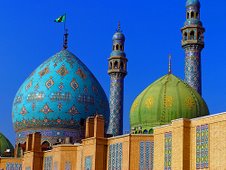
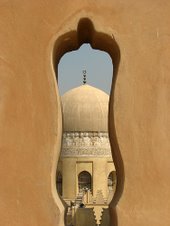
And here is an amazing photo of the Blue Mosque in Turkey


Blue Mosque, detail, originally uploaded by Timothy Neesam.

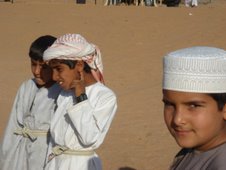
Friday prayers, Senossa, Mali

Photo courtesy of Steffan via Flickr

Mother and child, Nigeria


Mother and child, Nigeria, originally uploaded by Soumik.

West Africa does seem to be of increasing interest.....

But is America's interest about a. terrorism, b. oil, or c. both? (Full disclosure: Both are valid national interests as far as I'm concerned.)

Today's Wall Street Journal reports that the U.S. military is putting together a new command, Africom, to bolster West African countries. As the Journal writes:

The effort, already under way in Benin, is an example of the type of security and social partnering the U.S. military hopes to replicate under a new U.S. command center focused on Africa. The idea is to bolster fragile nations and prevent failed states from breeding radical groups, like the Taliban in Afghanistan in the 1990s.

Now consider this context:

The move comes as the world's biggest oil companies -- including U.S.-based Exxon Mobil Corp. and France's Total SA -- are investing billions of dollars to boost production in Africa. . .

In most months, the energy-producing countries of West Africa -- primarily Nigeria and Angola, but also Gabon and the Republic of Congo -- ship as much or more oil to the U.S. as Saudi Arabia and other Persian Gulf nations.

Incidentally, this isn't just about American interests, violence and oil-smuggling cost African nations - and oil companies in the region - hundreds of millions of dollars a year, says the Journal.

To assuage concerns that any American military presence in the region will only invite terrorists, Theresa Whelan, U.S. deputy assistant secretary of defense for African affairs, told the Journal that only in "extraordinary circumstances in extremis after all other options had been exhausted" would any type of military intervention ever be contemplated.

Libya was was singled out as being particularly cold to this new plan. More typical, suggested the Journal, was this response from a street vendor in Benin: "Beninese like the U.S. Having the U.S. here would help us, but it could bring terrorists," he says.

Tehran grows more isolated by the day

Agence France Presse reports that Egypt's Foreign Minister Ahmed Abul Gheit is accusing Iran of being behind Gaza's recent seizure of Gaza, and of creating problems in Iraq too. As the AFP reports via The (Australian) Age:

"Iran's policies encouraged Hamas to do what it has done in Gaza and this represents a threat for Egypt's national security because Gaza is a stone's throw from Egypt," the minister said in comments carried by the Al-Masri Al-Yom newspaper.

"The Iranian influence in Iraq also represents a threat for Egyptian and Arab national security. This obliges Cairo to restrict its relations with Tehran," he said.
As the newspaper goes on:
Closing ranks against Hamas, Egyptian President Hosni Mubarak has invited Israeli, Palestinian and Jordanian leaders to a summit on Sunday.

Palestinian poet, Mahmoud Darwish, on the current situation

Described as "their unofficial poet laureate" by the The Economist, the magazine publishes Darwish's reaction to, as the magazine puts it, "the internecine fighting that culminated, during one-blood-soaked week, in what some fear could be a fatal schism in their putative state":

June amazed us on its fortieth anniversary: If we do not find someone to defeat us again, we defeat ourselves with our own hand so as not to forget!
The fortieth anniversary Darwish refers to here is that of the Six Day War, the war in which Israel defeated the militarized Arab states in less than a week.

The defeat was so humiliating for the Arab leaders that Gamal Abdel Nasser, the leading Arab Nationalist at the time, wanted to resign from power. The Egyptians protested this move, and Nasser, as is typical in the region, remained in office until he died.

Regardless of the loyalty Egyptians felt towards Nasser, his political program, the idea that hte Arab states would draw strength from and unify around the idea that they were all Arabs, united by culture and language, would be supplanted by a new unifying force: Islam as the solution to the region's problems.

Hamas is one of the groups who was able to capitalize on this belief.

As to what Darwish thinks will happen to the Palestinians, as he continues in his poem:
O future: do not ask us: who are you?
And what do you want from me?
For we too do not know.

Thursday, June 28, 2007

A Classicist takes the pulse of the modern Middle East

Victor Davis Hanson, an expert on the Ancient Greeks, and a senior fellow at Stanford's Hoover Institution, opines in today's NRO:

On the debacle in Iraq he writes:

...the United States is taking an enormous toll on jihadists, and despite the terrible cost in blood and treasure, has not given up on a constitutional government in Iraq.
As to what's going on in Kurdistan:
...Kurdistan is emerging as a success few envisioned, refuting some conventional wisdom about the incompatibility of capitalism and constitutional government with Middle Eastern Islam.
On the Sunni Arab states:
The Sunni front-line states, who subsidized jihadists and still enjoy our misery in Iraq, but they are now terrified that these killers, in league with the Iranians, will turn on them. The net result is not just that some Sunnis are helping us in Iraq, but that they are being urged to for the first time by those in the Arab world, who would prefer to see the Iraqi government, rather than the terrorists, succeed.
And on Iran's quest for regional hegemony:
Theocratic Iran is not exactly as “empowered” as is generally alleged, but in the greatest crisis of its miserable existence. As the mullahs up the ante in the region, they could very soon not only lose Iraq, but also their own dictatorship. Trying to oppose the West in Iraq, Lebanon, and the West Bank is taking an enormous financial toll, as is the general isolation from the world community.

With oil prices at an all-time high, Iran can't provide gasoline for its own people, who resent the billions spent instead on Arab terrorists abroad. If oil were to dip from near $70 to $50-55 a barrel, the regime would face abject bankruptcy.
Next on Syria, Iran's loyal client-state:
Syria for all its terror still can't overthrow the government in Lebanon, but has managed the impossible: Not only does the Arab world seek to isolate it, but France and the United States are cooperating to thwart it in Lebanon.
On Hamas coup d'etat so to speak:
Hamas is high on victory in Gaza for now, but all it has accomplished is to further concentrate its nexus of terror into one small miserable — and quite vulnerable — locale in the midst of Jordan, Israel, and Egypt, while sacrificing the Palestinians greatest advantage: deniability of culpability. It will be harder now for the tired good cop/bad cop excuses, “militant wing,” etc. and all the other justifications for terror that the Palestinians use. Since Hamas bragged that it had routed (it matters less whether true or false) the Palestinian Authority from Gaza, the next barrage of rocket attacks from there, rightly or wrongly, will liberate Israel in its response from the past worries of collateral damage.
And finally, how the "Hezbollah victory" in Lebanon must look in hindsight from the perspective of the victors:
For all the talk of losing the Lebanon War, it is Iran and Syria, not Israel, that are stuck with billions in reconstruction costs for their battered Shiite pawns on the front lines.

If you think Israelis treat Palestinians bad, look how their Arab brothers treat them

Iraqslogger reports:

The plight of Palestinian refugees fleeing violence in Iraq and stranded in camps on the Syrian-Iraqi border is continuing to deteriorate as the summer heat intensifies and a solution remains elusive.

There is currently one camp on the Syrian side of the border, one in no-man's land and one on the Iraqi side of the border housing Palestinian refugees.

As the summer heat has increased, with temperatures now reaching 50 degrees Celsius, living conditions in the desert have become increasingly hazardous with snakes, scorpions and sand storms.

"The weather is very, very hot and people are becoming very nervous and upset," said one Palestinian in Al-Tanf camp, situated on no-man's land between Iraq and Syria. "We can't live here, it's too difficult. We need help, particularly air coolers."

"Children in particular are developing medical conditions that they've never had before simply because of the high heat and dust storms," said Sybella Wilkes, spokesperson for the UN High Commissioner for Refugees (UNHCR) in Syria. The refugees are becoming increasingly desperate.

Iraqi refugees, by contrast, haven't been herded into such camps. I wonder what the difference is - that's right, the Palestinians aren't really human - they're just political pawns to be moved around the region's chessboard - or at least that seems to be the Arab view.

Wednesday, June 27, 2007

Gas is cheap in Iran - well, if you can get it

Look at this interesting graphic from Foreign Policy comparing what it costs to fill up a Honda Civic:


But as was widely reported today, while Iranians may have about the lowest gas prices in the world, Tehran just announced last night that gas rations would now be in effect.

Apparently some Iranians weren't too happy about this - up to 17 gas stations were reportedly set on fire by people protesting the government's new policy. As the Associated Press reports via the International Herald Tribune:

The president has come under growing criticism _ even from conservatives who once supported him _ for dramatically rising housing and food prices in the past year. Many fear the increase in fuel costs will further increase inflation.

"This man, Ahmadinejad, has damaged all things. The timing of the rationing is just one case," said Reza Khorrami, a 27-year-old teacher who was among those lining up at one Tehran gas station before midnight on Tuesday.
I'm reminded of the line from Hamlet. Ahmadinejad now seems to be in the process of hoisting himself with his own petard.

And just I was feeling a bit smug myself...

Indulging in some of my own self-congratulation, feeling that well, in the end, it will be we optimists who prevail (see post below if you have no idea what I'm talking about here), I then have a severe reality check when I see this New York Times story: "Truck Bomb Hits Baghdad Mosque, and 61 Are Killed."

You should check out Alissa Rubin's multimedia presentation from the scene of the aftermath to fully appreciate the horror of what just happened.

But, in case you can't, here's a glimpse from the Times written report:

"It was like an electrocution,” said Najim Abdul Wahid, 45, a carpenter who was working in the square at the time. “I saw a flash. When I was able to stand up again, I saw many charred bodies in the streets. People were screaming, calling for help. I saw many people burning inside their cars. Charred bodies mixed and melted with charred cars.”
Iraqis blamed the usual suspects for the bombing, Rubin reports (duly noted - they didn't blame Mossad - yet):
Jalal Jaff, a Sunni Kurd, who lives just behind the street where the bomb exploded and raced to the scene to pull people from burning cars, turned his head away on Tuesday as he passed the parking lot with more than a dozen destroyed cars, only their charred frames left, the rubber completely burned off their tires.

“He is a paid terrorist, not a human being,” he said. “The families will never know which body belongs to their relatives. They were mutilated. They had no faces.”

Like most of the people in the neighborhood, Mr. Jaff blamed Al Qaeda, a term used by Iraqis to refer generally to terrorists. The group operating in Iraq known as Al Qaeda in Mesopotamia includes many Iraqis but has some foreign leadership.

“Al Qaeda is like an octopus with many arms and hands,” he said. “This bombing was a challenge to the American and Iraqi army; they cannot get rid of these terrorists.”

Others in the neighborhood went further, accusing the Americans of helping Al Qaeda, which most people believe is responsible for the majority of the suicide bombings.

A man who identified himself only as Qassim, some of whose friends were killed in the large open parking lot across from the mosque, shouted: “The Americans finance Al Qaeda. They secure places and routes for them to do this.”

But others said they saw the bombing as an effort by religious extremists to inflame sectarian divisions. “People here realize that there is a conspiracy to sow hatred between us,” said Mr. Jaff.

Smug alert: Beware of good news from Iraq

USA Today has an interesting set of graphics on the changes in death patterns in Iraq.

The number of civilians killed in multiple-fatality bombings targeting civilians (read terrorist attacks) seems to be plummeting.

Jan 379
Feb 622
Mar 617
Apr 634
May 325
Jun 38 (through June 8)

Now I admit, the June numbers are way too preliminary, but still, there does seem to have been some positive trending.

The cost of this progress, you should note, has been U.S. and Iraqi military lives. As USA Today reports, April and May were the deadliest two-month period since the war began for U.S. forces. And Iraqi military and police fatalities topped 300 in April compared to January's death toll of 91.

Now whether this positive trend will continue - well, I hope it will. But then I'm not someone who is invested in the idea that the U.S. should fail in Iraq.

Call me cynical, but I sense that some people want the U.S. to fail in Iraq only so they can say I told you it would be a disaster. They don't care about the consequences of such a failure, they are just desperate to feel smug.

Tuesday, June 26, 2007

This guy must have a bad case of Islamophobia....Oh wait, he can't, he's....Muuusssssssssss

Here's what the doctor is ordering for Hamas

(No wonder this guy no longer practices medicine.)

The BBC is reporting that Dr. Ayman al-Zawahiri, Bin Laden's second-in-command (or his he in charge now? -- it has been a long time since we've heard from the top Al Qaeda leader) is suggesting that Hamas unite with Al Qaeda.

Apparently this idea occurred to him after seeing that Hamas was finally in control of its own territory in Gaza. Of course, as he says in the videotaped message, "taking over power is not a goal but a means to implement God's word on earth." By this he most likely is tacitly suggesting that now is the time for Hamas to ensure that not only the human sexes are segregated now in Gaza, but also the vegetables too.

Or maybe, after having seen where that brilliant stroke of governance led (the Anbar Province revolt for those of you who only look at the pictures on this blog), maybe he didn't purposefully mention this now because perhaps he's thinking that it would make more sense to first shut all girls' schools down, ban women (and laughter) from the public square, forbid women from working (including, of course, even widows who might be the only remaining breadwinners for their families), crush the homosexuals to death, outlaw kites, toys, videos, music on the radio, and, yes, pet songbirds, too, and convert all the soccer stadiums to chop-chop squares (that is places where the public can gather to see people beheaded, adulteresses stoned, and thieves relieved of their hands). At that point, he seems to tacitly suggest here, nobody will rebel when they're asked to segregate their vegetables.

Great advice, doctor and I bet Hamas is dumb enough to follow it too.

Monday, June 25, 2007

And now a break from jihad

Unless of course your idea of jihad is the spiritual rejuvenation you'll get from this rocking video by the Bangladesh group Maqsood O'dHAKA.

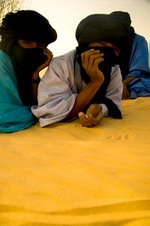
A Tuareg chief at the annual Festival at the Desert

I'd like to see bin Laden tell this guy his people can no longer host such un-Islamic events.

FestivalAuDesert063, originally uploaded by cedavril_.


Or will Al Qaeda youth soon be joining Tuareg dancers?

Then again, maybe they already have.

Danseurs, originally uploaded by Yelema.

See post below to see what I'm talking about.

Will Al Qaeda youth now be joining Tuareg bands?

Vanity Fair also has a great article in this month's issue on Mali's annual Festival of the Desert, written by former MTV Networks chairman and Viacom C.E.O. Tom Freston.

He, Jimmy Buffet, the "troubadour of the Caribbean" - as Freston calls him - and Island Records founder Chris Blackwell (among others) attended last year's annual celebration of Tuareg music and culture, that took place, as it has since it began in 2001, in the Sahara desert, 70 km north of Timbuktu.

As Freston writes:

Timbuktu used to sit on the edge of the desert. Today, with desertification, the sands have passed it by on their journey south. The city is inhabited mostly by Tuareg, who are nomadic, very independent, and ethnically different from those who live in southern Mali. There are people in Timbuktu from the Fulani and Songhai tribes as well. The Tuareg have risen up regularly - against the French in colonial times and against the Malian government today. There was a bloody rebellion more than a decade ago, with a lot of fighting in Timbuktu itself. It ended in 1996, with promises of better representation for the Tuareg in the government, and more freedom of movement.

Since then it's been mostly quiet on the northern front. Today, Mali is a functioning Muslim democracy. On some levels, it is a study in success. The country is tolerant, diverse, optimistic, and stable. But it's also, and very obviously, one of the world's poorest countries.
Freston and his fellow travelers are among the few Americans who attended last year's festival, he reports, most likely because of the advisory the U.S. State Department had issued just prior to the event, warning Americans that "banditry, factional rivalry, and car jackings" made this "lawless area" unsafe to visit.

Freston was surprised then, that the first festival goers he encountered upon landing in Timbuktu were, well, fellow Americans. He writes:
Three young Americans, all with military buzz cuts and identical wraparound shades, meet us. Turns out they are looking for Jimmy Buffett. Parrotheads in the Sahara. They tell us they are with "the D.O.D." I was unsure what that was, and they clarified ("Department of Defense"). We'll run into them again, but never quite figure out why they're here.
As he continues his report, the festival closed with "rousing set from the group Tinariwen" as he explains, the band formed in the rebel camps of Libya, where Colonel Muammar Qaddafi was providing refuge to the Tuaregs in the 1990s. In addition to a safe harbor, the rebels also discovered electric guitars. In the camps, Freston writes:
The young men practice, they write songs about revolution and freedom, and they marry these lyrics to a new electric sound. On top of that, these young Muslims create a band that has (gasp) women in it. Then, in this land of no media, no Internet, the music of Tinariwen travels all over the Sahara by casette and inspires an entire generation of young people. The music is officially banned in Algeria and Mali, which only adds to its allure.
Eventually, however, peace comes, and as Freston continues:
The band moves back to Mali, signs an international record deal, gets down to business, and becomes even more popular.

Tinariwen's story parallels Mali's more hopeful scenario. Swords turn to guitars, democracy blooms, and music helps bring a sense of national unity. I'm not sure I ever understood what those American soldiers were doing in Mali's desert. But I do know that the American invasion that really made a difference here was one of electric guitars.
I can tell Freston what the other Americans were doing there: they were obviously looking for signs of Al Qaeda, now alleged to have established training camps in the Tuareg region.

So here's a question: Now, assuming that Al Qaeda really is being harbored in Tuareg territory - and this is not at all well established as far as I'm concerned - will the Tuareg change Al Qaeda or will Al Qaeda change the Tuareg?

Because as much as I appreciate Freston's belief that all it took was American-made electric guitars to bring peace and democracy to Mali, I can guarantee that if the Al Qaeda folks are considering staying in these parts, they're not going to see these foreign instruments quite the same way Freston does.

On that note, I'd love to see what measures bin Laden will have to take to keep his teenagers away from next year's festival - assuming, of course, they really are in the Sahel (that is Mali and environs, what used to be the edge of the Sahara).

By the way, you can see the BBC slideshow presentation on last year's Festival in the Desert here.

Wow, could China really be worse than the West?

Photo by Pan-African News Wire...
Sudanese President Omar al-Bashir being greeted by
Chinese official at the 2006 Sino-African Summit


To find if China might be a more irresponsible, um, power, than Western countries, we will begin by looking at what the Christian Science Monitor's uncovers in its four-part probe into the question "Is China Good for Africa?"

Today's focus will be on Sudan. As the Monitor apprises us: 64 percent of Sudan's oil is now sold to China, the world's second-largest consumer of oil, after the United States.

But check this out, China is also the majority owner of Sudan's two largest oil consortiums, Petrodar and the Greater Nile Petroleum Operating Company.

So how is China, Sudan's new, um, economic partner, comporting itself in the Sudan? As the Monitor reports:
CNPC has invested billions in oil-related infrastructure here in Paloich, including the 900-mile pipeline from the Paloich oil fields to the tanker terminal at Port Sudan on the Red Sea, a tarmac road leading to Khartoum, and a new airport with connecting flights to Beijing.

But they have not invested in much else here.

Locals live in meager huts, eating peanuts with perch fished out of the contaminated Nile. There is no electricity. A Swiss charity provides healthcare. An American aid group flies in food and mosquito nets. Most children do not go to school. There is no work to be found. Petrodar, for one, has its own workers – almost all of whom are foreigners (mostly Chinese, Malaysians, and Qataris) or Sudanese northerners. The consortium hires Paloich residents only rarely, for menial jobs.
And what do the locals think? According to the Monitor:
Locals blame their lot on oppression by Sudan's Islamist government and the long war with the north. But they also blame the Chinese.

"[The Chinese] moved us away so we would not see what was going on. They were stealing our oil and they knew it," says Abraham Thonchol, a rebel-turned-pastor who grew up near Paloich. "Oil is valuable and we are not idiots. We were expecting something."

US-based Chevron was the first oil company to arrive here, setting up operations in the 1980s. "They employed us," says Mr. Thonchol. "We helped with the drilling, drove them around, and worked as cooks. "

The second group of oilmen to show up was not as benevolent, say many locals. [As one told the Monitor,] "They looked like whites to us. We could not detect any difference, except, maybe, that they were shorter," he says. "But then we found they behaved differently."

Chased out by civil war in the mid 1980s and '90s, and later kept away by pressure from human rights groups, Chevron and other Western companies left the oil fields for others. . .
Chinese firms were more than happy to fill the void.
But as the Monitor goes on:
Chinese operations were marked "from the beginning," by a "deep complicity in gross human rights violations, scorched-earth clearances of the indigenous population," says Sudan activist Eric Reeves, a professor at Smith College in Northampton, Mass.
In Darfur, for example, the China supplied the Sudanese government with most of the arms it in turn is alleged to have given the janjawid, the militia it used to kill hundreds of thousands of tribal Africans since a rebellion began there in 2003.

As a Darfur rebel, a leader of the Justice and Equality Movement in Darfur, Abdul-Aziz Mour, told Sebastian Junger who writes about the Chinese in the Sudan and Chad in this month's Vanity Fair:
"Darfur was a sovereign state until 1916. Now 95 percent of the population lives on half a dollar a day. We don't have a single paved road. We are fighting for very basic human rights, like education. We are fighting for drinking water. Our country is not poor; we are living on a big cistern of petroleum. And the central government is killing us like snakes."
John Prendergast of the International Crisis Group seems to corroborate Mour's view, as he reportedly told Junger, "[The Sudanese government] is basically destroying the non-Arab population in Darfur to destroy the rebellion."

Junger calculates that Khartoum has spent some 80 percent of its oil revenues on arms since 2003 quelling this insurgency, with most of these arms being purchased from - you guessed it - China. As he concludes, this means that most of the $2 billion dollars a year the Chinese were spending on Sudanese oil was immediately made back in weapons deals.

Not surprisingly, then, it the fact that it is China who effectively blocks any U.N. resolutions proposing sanctions or military force against Sudan to put pressure on Khartoum to stop what President Bush has termed the genocide going on there. Without U.N. - or Chinese - support, U.S. sanctions alone have little bite.

But, before we in the West can take comfort in China's emergence, an emergence that would it seems, portend to make us feel that we're no longer the guiltiest parties on the planet, consider Junger's conclusion:
The tragedy in Darfur - and perhaps a future tragedy in Chad - is fueled by China's reliance on brutal regimes for access to oil. That reliance, however, stems directly from Western domination of more easily accessible supplies. For example: in 2005, a state-owned Chinese oil company tried to buy the American oil giant UNOCAL for a price that was $1 billion higher than that of the closest Western bidder. Reaction in the U.S. Congress was so blistering that UNOCAL accepted the lower bid rather than open the door to China.
Alas, we're still the root cause of all the world's problems, even when it is China who is carrying out today's abuses...

Remember this casus belli? (That is, justification for war)...

From the "Joint Resolution to Authorize the Use of United States Armed Forces Against Iraq":

"Whereas the current Iraqi regime has demonstrated its capability and willingness to use weapons of mass destruction against other nations and its own people;"
Well, as John Burns reports from Baghdad in today's New York Times, another one of the former regime elements who used these WMDs against his fellow Iraqis appears to be just about to bite the dust:
As the judge pronounced five death sentences on the man Iraqis know as Chemical Ali, the defendant seemed on Sunday to be a shadow of the merciless enforcer who oversaw poison gas attacks that killed thousands of Kurdish villagers in Iraq’s northern uplands nearly 20 years ago.

At the age of 61, severely weakened by diabetes, the defendant, Ali Hassan al-Majid, leaned heavily on a walking stick for the 18 minutes it took the judge to read guilty verdicts on counts of genocide, war crimes and crimes against humanity. . .
As the Times reports, this sentence brings to seven the number of top officials who have been sentenced to death for their crimes against the Iraqi people under the regime of Saddam Hussein. Four of these have been executed. As the Times continues, this marks the end of the Anfal trial, Saddam's name for his campaigns against the Kurds in which an estimated 180,000 men, women, and children were killed when Iraqi forces bombed and razed hundreds of Kurdish villages, and tortured and starved to death many of the survivors because he suspected the Kurds of having been traitors during the Iran-Iraq War (1980-1987).

Even though there hasn't been much interest in this trial - either in the Iraqi or the international press - there are even more such trials to come. As the Times continues:
The next case will be the so-called Intifada trial, involving the suppression of a Shiite uprising across southern Iraq in 1991 that followed the Persian Gulf war, in which, Shiite officials say, at least 150,000 people were killed. . .

At least 10 other trials are being prepared, Iraqi officials say. One will focus on the poison gas attacks in March 1988 that devastated the town of Halabja in Iraqi Kurdistan, where as many as 5,000 people are said to have been killed. That attack, more than anything else, drew international attention to the plight of the Kurds under Mr. Hussein. It was separated from the Anfal trial because of its notoriety, and its deep resonance among the Kurds.

Other trials will center on the killing of prominent religious and political figures under Mr. Hussein; the killing of hundreds of members of a prominent Kurdish political family, the Barzanis, in the 1980s; the persecution of the Shiite marsh dwellers of southern Iraq; and an incident in 1993, when another half-brother of Mr. Hussein’s, Watban Ibrahim al-Hassan al-Tikriti, arrested dozens of Baghdad market-sellers for alleged profiteering in foodstuffs, then had them hanged from lampposts after trials that lasted less than a day.
Note this interesting commentary on "Western legal-monitoring groups":
For the Kurds, the Anfal verdict’s significance was heightened by the fact that five of the six defendants were found guilty of genocide. While Western legal-monitoring groups have expressed doubts whether the Anfal campaign met the international legal definition of genocide, in the sense of a systematic attempt to wipe out an entire ethnic or religious group, Kurdish officials in Iraq had said that guilty findings on the genocide charges would add momentum to the claim by Iraqi Kurds that their survival can be assured only by an entrenched autonomy within Iraq.
I wonder, by contrast, how many of these same Western legal-monitors support the Armenian's claim to genocide with respect to Turkey's actions during World War I. I hope somebody does this analysis (as I'm too busy at the moment).

Sunday, June 24, 2007

Does this crackdown really mean Iran is cracking up?

The New York Times reports:

Iran is in the throes of one of its most ferocious crackdowns on dissent in years, with the government focusing on labor leaders, universities, the press, women’s rights advocates, a former nuclear negotiator and Iranian-Americans, three of whom have been in prison for more than six weeks.

The shift is occurring against the backdrop of an economy so stressed that although Iran is the world’s second-largest oil exporter, it is on the verge of rationing gasoline. At the same time, the nuclear standoff with the West threatens to bring new sanctions.
To me this seems like the Islamic Republic must be getting desperate. And here are even more signs that the Iranian leadership is flailing (not failing, flailing - as in acting as though it has no clue about how to lead or what people expect from a government):
The country’s police chief boasted that 150,000 people — a number far larger than usual — were detained in the annual spring sweep against any clothing considered not Islamic. More than 30 women’s rights advocates were arrested in one day in March, according to Human Rights Watch, five of whom have since been sentenced to prison terms of up to four years. They were charged with endangering national security for organizing an Internet campaign to collect more than a million signatures supporting the removal of all laws that discriminate against women.

Eight student leaders at Tehran’s Amir Kabir University, the site of one of the few public protests against Mr. Ahmadinejad, disappeared into Evin Prison starting in early May. Student newspapers had published articles suggesting that no humans were infallible, including the Prophet Muhammad and Iran’s supreme leader, Ayatollah Ali Khamenei.

The National Security Council sent a stern three-page warning to all the country’s newspaper editors detailing banned topics, including the rise in gasoline prices or other economic woes like possible new international sanctions, negotiations with the United States over the future of Iraq, civil society movements and the Iranian-American arrests.
And here is even more evidence of the regime's current desperation:
At least three prominent nongovernment organizations that pushed for broader legal rights or civil society have been shuttered outright, while hundreds more have been forced underground. A recent article on the Baztab Web site said that about 8,000 nongovernment organizations were in jeopardy, forced to prove their innocence, basically because the government suspects all of them of being potential conduits for some $75 million the United States has earmarked to promote a change in government.

Professors have been warned against attending overseas conferences or having any contact with foreign governments, lest they be recruited as spies. The Iranian-Americans are all being detained basically on the grounds that they were either recruiting or somehow abetting an American attempt to achieve a “velvet revolution” in Iran.
But as the Times continues:
Not that everyone has been intimidated. More than 50 leading economists published a harshly worded, open letter to the president saying his policies were bringing economic ruin. High unemployment persists, there has been little foreign investment and inflation is galloping, with gasoline alone jumping 25 percent this spring.

. . . Amid all the recent oppression, for example, last week the public stoning of a couple — the punishment for adultery — was called off. Women’s rights advocates had been agitating against it.
You see, there's still hope in Iran after all.

Is this how Marines really see the media? Ya think?

The New York Times excerpts from a memo of "talking points" that Marine officers prepared after a Time Magazine reporter, Tim McGirk, inquired about the killing of 24 Iraqi men, women, and children in Haditha in 2005. The Iraqis were allegedly killed by Marines after a roadside bomb killed an infantryman and wounded two others. At the time they wrote the memo, as the Times writes, the "Marine officers assumed the Iraqi deaths occurred during combat and were justified, if regrettable."

Some excerpts from the memo as it does seem to reveal how the Marines see the American media in Iraq.

McGirk: How many marines were killed and wounded in the I.E.D. attack that morning?

Memo: If it bleeds, it leads. This question is McGirk’s attempt to get good bloody gouge on the situation. He will most likely use the information he gains from this answer as an attention gainer.


McGirk: Were there any officers?

Memo: By asking if there was an officer on scene the reporter may be trying to identify a point of blame for lack of judgment. If there was an officer involved, then he may be able to have his My Lai massacre pinned on that officer’s shoulders. ...

In the reporter’s eyes, military officers may represent the U.S. government and enlisted marines may represent the American People. Given the current political climate in the U.S. at this time concerning the Iraq war and the current administration’s conduct of the war, the reporter would most likely seek to discredit the U.S. government (one of our officers) and expose victimization of the American people by the hand of the government (the enlisted marines under the haphazard command of our “rogue officer.”) Unfortunately for McGirk, this is not the case.

One common tactic used by reporters is to spin a story in such a way that it is easily recognized and remembered by the general population through its association with an event that the general population is familiar with or can relate to. For example, McGirk’s story will sell if it can be spun as “Iraq’s My Lai massacre.” Since there was not an officer involved, this attempt will not go very far.

We must be on guard, though, of the reporter’s attempt to spin the story to sound like incidents from well-known war movies, like “Platoon.”

In “Platoon,” Sergeant Barnes, the movie’s antihero, is depicted as a no-nonsense, war-haggard platoon sergeant who knows how to get things done in the bloody jungles of Vietnam — and it ain’t always pretty. During one scene, Sergeant Barnes is shown on the verge of committing war crimes in front of his platoon by threatening to kill women and children as a means of interrogation. This is a classic “runaway sergeant” storyline wherein the audience is supposed to be sickened by the sergeant’s brutality and equally sickened by the traumatic effects war has on soldiers. This schema is especially fruitful for Mr. McGirk because if he tries to adapt our situation to this model it simultaneously exposes a “war crime cover-up” and shows the deteriorative (albeit exaggerated) effects of war on U.S. marines (the best of the best), which could be expanded by the general press as a testament for why the U.S. should pull out of Iraq.

[Colonel Chessani later shortened this answer to “No.”]
Eventually the Marine Corps would charge three enlisted men with murder and four officers with dereliction of duty pursuant to the killings. It was in the course of this trial, still ongoing, that this memo surfaced. There's more in the Times article so check it out.

More evidence Al Qaeda in Iraq is losing its grip

Time Magazine's Joe Klein writes from Baquba, as he writes, "the centerpiece of the current U.S. offensive in Iraq" where, he writes, "an estimated 400 to 500 al-Qaeda fighters were estimated to be in the city when the U.S. forces attacked on Monday." As he reports:

A lieutenant colonel named Bruce Antonia told [Lt. Gen. Raymond] Odierno about preparing to attack the Buhritz neighborhood a few nights earlier when he was approached by local Sunni inusurgents—members, they said, of the 1920 Revolutionary Brigades—who were streaming out of the neighborhood. "They said they'd been fighting al-Qaeda but had run out of ammunition and asked us to supply them. We told them, 'Show us where AQ is and we'll fight them.'" The insurgents did and the neighborhood was cleared.

A second lieutenant colonel named Avanulis Smiley picked up the story from there, "Sir, they've also showed us seven buried IED sites. They gave us specific information—description of the houses, gate color, tree trunks."

After the briefing I asked Colonel Antonia if he'd asked the Sunnis why they had turned against al-Qaeda. "They said it was religious stuff," he said. "AQI demanded that the women wear abayas, no smoking and they preached an extreme version of Islam in the mosque. They'd also spent the winter without food and fuel because of the violence al-Qaeda was causing. One guy said to me, 'We fought against you because you invaded our country and you're infidels. But you treat us with more dignity than al-Qaeda,' and he said they'd continue to work with us. I've been involved in many operations here and this is a first—usually everybody's shooting at us. This is the first time we've had any of them on our side." (In web postings, the 1920 Revolutionary Brigade has denied it is cooperating with the Americans.)

Odierno later told me similar anti-al-Qaeda rebellions were happening throughout the country, including some neighborhoods of Baghdad. "Iraqis notice things. They noticed what happened when we began to support the Sunni tribes against al-Qaeda in al-Anbar. And al-Qaeda seems to have overplayed its hand."

At a second briefing, at a bunkered, joint U.S.-Iraqi command post in the middle of Baquba, the news was less optimistic. An Iraqi General said that he was pretty certain that the al-Qaeda leadership had slipped away, north to Tikrit and Samarra, and that many of the fighters were burying their equipment before they left town, hoping to return—as always—when the Americans left. "Well, it's up to you to make sure they don't come back," Odierno said.
Indeed.

As I would think it must be clear to anyone with even the most remote access to the American media: the U.S. cannot be counted on to stay long in Iraq.

Contrary to what our enemies both at home and abroad might have you believe, the vast majority of Americans see their country as a republic not an empire. Those who supported the Iraq invasion saw its end-goal as the removal of a dictator who would have happily supplied America's enemies refuge, training, and yes, weapons of mass destruction.

Is there anyone who disputes the notion that, at the very least, Saddam wished he had WMDs? Why else would he have subjected his people to more than a decade of punishing sanctions? Why else would he have played the games he did with the U.N. weapons inspectors?

Anyway, it's important, I think that Iraqis at least grasp this fundamental American reality: Americans will not stay in Iraq forever; in fact, the sooner they can leave, the better.

Daniel Pearl's parents on Daniel's legacy

UCLA’s Judea Pearl, father of slain journalist Daniel, background, works to build Muslim-Jewish relations.
(Stephen Osman / LAT), September 1, 2006


The parents of Daniel Pearl, the Wall Street Journal reporter who was kidnapped while he pursued a story on radical Islam in Pakistan and then beheaded for being Jewish spoke to the Los Angeles Times about what they want people to take away from their son's story, now memorialized in the film "A Mighty Heart" starring Angelina Jolie.

"We are hoping the movie will bring curiosity about Danny," said Judea Pearl, a UCLA professor who started a foundation with his wife to promote greater cultural understanding in the wake of his son's death. "We want people to learn about his legacy. We can't let this happen again."
As the Times continued:
As sophisticated people who understand the power of media, they've been searching since their son's death for Hollywood allies who will help them get their message out.

"I see many celebrities involved in social causes," Judea Pearl said. "Many them are interested in fighting diseases and responding to natural disasters. Very few, perhaps even none, is addressing the tsunami of hatred that has swept our planet in the past decades.

"It's not a fight of medicine. It's a fight of ideology. Of ideals. I wish we could see more interest in that struggle."

The Daniel Pearl Foundation has undertaken several projects, including holding a music day in October with concerts around the globe; offering internships at various U.S. newspapers to foreign journalists, particularly those from South Asia, the Middle East and North Africa; and sponsoring an annual lecture series at UCLA and Stanford to discuss ways to further cultural understanding. . .

"I never let myself think this is a therapy," he said. "If I had known this is a therapy, I would have stopped doing it. I'm doing it because it's effective. We're trying to harness the goodwill and energy to contain the tsunami."

Ruth Pearl says, "I worry about the next generation. If we don't address this now, what will become of us? What will become of our children?
Incidentally, Muslims - and non-Muslims too - might check out what Judea Pearl says regarding the future of Islam. In this FrontPageMagazine.com article he addresses those who suggest that Islam itself is the problem, who insist that there can never be such a thing as a good-neighborly Islam.

An Iranian American Jew sorts out what exactly that means

A reader, freelance journalist Karmel Melamed, sent me a link to his wonderful blog Iranian American Jews & Middle East Affairs.

While his focal point is that of an Iranian American Jew, his message seems to me to be pretty universal: the struggle we all go through to figure out who we are - what family values and traditions we want to retain in life versus those we will have to free ourselves from; the lessons we need to learn from our collective experience, and how we should use this knowledge to make ourselves stronger and healthier as opposed to weaker and more victim-like.

To give you an idea of his perspective, here are some excerpts from his interview with Tania Eshgahoff, an Iranian-American Jewish pianist in New York who has performed at Carnegie Hall.

Your music is obviously Persian influenced, why have you as a young Jew who has been raised in the U.S. with so exposure to Western culture still decided to embrace Persian music?

I get asked that question often and I can not really explain it. At age 7, I was attached to Persian melodies. I wanted to constantly repeat the rhythms of the Santour, but I wanted it to be symphonic. I remember when no one was around, I would “get into it.” I mean really lose myself in the music-- I could hear violins and deep bass drum rolls. I could hear a harpist play a chord and French horns add to each measure. But it was very frustrating because I had these sounds in my mind but did not know what it meant and why it is when I play my piano that all that comes out is piano notes. Persian music has been my preface for everything. It sings to me and connects deep in the root of who I am. I am learning maybe it is because of all of those minor chords, how can you not get emotional from that.

. . . Most Persian parents frown upon their children going into careers that are not the traditional professions of medicine or law. What reaction did you receive from friends and relatives when you told them about your desire to pursue a career in music?

Interesting question and it is a bitter-sweet answer. It was not encouraged as a life-long career. Even now, I do face certain criticism and judgments about playing on a big stage. The appropriateness of pursing ones art as a Persian-Jewish woman is mixed with the idea of a Persian Jewish woman giving up and compromising marriage. I think many who feel that way, did not have opportunities to explore what is deep with in them. They only know the obligations, joys and commitment to family, not pursuing this inner-child music obsession. I wish children would begin to have the opportunity, to feel what it is like when your music is being played by these wonderful instruments, among hundreds and hundreds of souls sitting in the audience. You learn that only you, yourself can decide how badly you want something. If you work hard at it and surround yourself by people who support that, you will make it!

. . . Do you think mainstream America is ready to embrace Middle Eastern and Persian influenced music amidst the threat of terrorism coming from that part of the world?

Living in New York City, I find myself in a world that is very accepting of people’s heritage. New York is incredibly cosmopolitan, it is a cultural Mecca. So I never feel a hesitation but more a celebration of this type of music. Non-Persians are so moved that they can understand this music. They feel that they have just visited Iran-- they are interested, and open to learning. It has a Middle Eastern mysticism but the orchestration is very western and classical. And young Persians are a bit enthralled that their parents’ old-folk music is in a form that is very contemporary for them to embrace and feel proud that this is their heritage. In fact a network here in New York has been inquiring about the work I do and find it interesting that there are Jewish Iranians here in New York making beautiful music and art, so different from the headlines we are seeing today.
Anyway, anyone struggling with wanting to retain their traditional identity in a modern world should check out his blog whenever you're feeling that you're the only person going through this.

Thursday, June 21, 2007

Live from Baghdad: New Sunni alliance forming to oppose Al Qaeda in Iraq

USA Today reports, er, yesterday, that more Sunnis are joining the fight:

More than 10 Iraqi tribes in the Baghdad area have reached agreements with U.S. and Iraqi forces for the first time to oppose al-Qaeda, raising the U.S. military's hopes that a trend started in western Iraq is spreading here.
Some of the groups, which have members who fought alongside al-Qaeda in the past, have been providing useful intelligence to U.S. forces about their former allies, according to the U.S. military.

"They know where they live and who they are," said Lt. Col. Rick Welch, a staff officer who works with tribes in the capital area.

General Petraeus speaks to the London Times from Baghdad

Here are some of the excerpts his interview which took place June 10th.

What about the US military operation currently underway in Diyala province (northeast of Baghdad)?

"Zarqawi (the former al-Qaeda leader in Iraq) stated that he intended for Baquba (the capital of Diyala) to become the new capital of his caliphate in 2006 shortly before he was killed. The downward spiral of Baquba began in late summer last year. You get a cycle where al-Qaeda moves in, they put down some roots, they intimidate the security forces, which means the security forces and the Coalition get less intelligence which means their operations are less effective. It just sort of goes down. We have seen it in other provinces. As al-Qaeda were pushed out of Anbar province this year in mid-March, more of them moved across to Diyala."

Are you concerned about the tactic of arming groups that previously opposed you?

"You want locals to establish local security. In Anbar Province tribes have always been important. You can't ignore the tribes, they are of enormous importance? If you have a police support unit, you put them through a 40-hour course we call them police auxiliary in the US. You want to tie them in. Get them on the payroll. Then you can get them to enlist in the army. Those are working. They swear allegiance to Iraq. Those oaths mean something to people who put premium on honour."

What about al-Qaeda?

As they were run out of Euphrates river valley they moved east. There will be big fights in some of these areas. An awful lot of their foreign fighters come through Syria. Eighty or so foreign fighters come through a month. That does not sound like much but every one of those is a potential suicide bomber. We think that 80 to 90 per cent of suicide bombers are foreign fighters.

What about the leadership in Iraq?

"It is still led by foreigners called al-Qaeda Senior Leadership (AQSL). Our assessment is that this is the central front for al-Qaeda. They have a global war of terror, and Iraq is the central front. Whether you like it or not. That is something that the leaders of the intelligence community in the West and our joint special operations commander agree on and that is why he is here two thirds or three quarters of his time. It is certainly one very important consideration in looking at Iraq."

What about political reconciliation at the national level?

“Some of legislation is more important than others. For example the oil law has an enormous far-reaching long-term effect. The idea of enshrining in law the idea that the oil revenues of a country are to be shared equitably with all Iraqis. That is a very significant development. It is huge. It is in the framework. They are very, very close on this. Long term it is hugely important both to the economic revival of Iraq and to keep the country together as one.

Wednesday, June 20, 2007

"Awful Insurgents" as opposed to, um, Minutemen

Hamas speaks

And now for the Hamas side of what just happened in Gaza from Ahmed Yousef, political advisor to Ismail Haniya, the Palestinian prime minister via the New York Times:

THE events in Gaza over the last few days have been described in the West as a coup. In essence, they have been the opposite. Eighteen months ago, our Hamas Party won the Palestinian parliamentary elections and entered office under Prime Minister Ismail Haniya but never received the handover of real power from Fatah, the losing party. The Palestinian president, Mahmoud Abbas, has now tried to replace the winning Hamas government with one of his own, returning Fatah to power while many of our elected members of Parliament languish in Israeli jails. That is the real coup.

From the day Hamas won the general elections in 2006 it offered Fatah the chance of joining forces and forming a unity government. It tried to engage the international community to explain its platform for peace. It has consistently offered a 10-year cease-fire with the Israelis to try to create an atmosphere of calm in which we resolve our differences. Hamas even adhered to a unilateral cease-fire for 18 months in an effort to normalize the situation on the ground. None of these points appear to have been recognized in the press coverage of the last few days.

Nor has it been evident to many people in the West that the civil unrest in Gaza and the West Bank has been precipitated by the American and Israeli policy of arming elements of the Fatah opposition who want to attack Hamas and force us from office. For 18 months we have tried to find ways to coexist with Fatah, entering into a unity government, even conceding key positions in the cabinet to their and international demands, negotiating up until the last moment to try to provide security for all of our people on the streets of Gaza.

Sadly, it became apparent that not all officials from Fatah were negotiating in good faith. There were attempts on Mr. Haniya’s life last week, and eventually we were forced into trying to take control of a very dangerous situation in order to provide political stability and establish law and order.

Ok, so this is the Hamas view of what just happened. So how does Hamas see the way forward? What should we expect of them? Yousef continues:
We have begun disarming some of the drug dealers and the armed gangs and we hope to restore a sense of security and safety to the citizens of Gaza. We want to get children back to school, get basic services functioning again, and provide long-term economic gains for our people.
Ok, now what about this stated goal of Hamas, that its purpose is to take back all the land under Israel's control, not just the West Bank and Gaza? I quote here what they say in their 1988 Covenant:
The Islamic Resistance Movement [aka Hamas] believes that the land of Palestine is an Islamic Waqf consecrated for future Moslem generations until Judgement Day. It, or any part of it, should not be squandered: it, or any part of it, should not be given up. Neither a single Arab country nor all Arab countries, neither any king or president, nor all the kings and presidents, neither any organization nor all of them, be they Palestinian or Arab, possess the right to do that. Palestine is an Islamic Waqf land consecrated for Moslem generations until Judgement Day. This being so, who could claim to have the right to represent Moslem generations till Judgement Day?

This is the law governing the land of Palestine in the Islamic Sharia (law) and the same goes for any land the Moslems have conquered by force, because during the times of (Islamic) conquests, the Moslems consecrated these lands to Moslem generations till the Day of Judgement.
Not surprisingly, the Hamas spokesman Yousef doesn't say much on this issue:
We continue to believe that there is still a chance to establish a long-term truce. But this will not happen unless the international community fully engages with Hamas.

Any further attempts to marginalize us, starve our people into submission or attack us militarily will prove that the United States and Israeli governments are not genuinely interested in seeing an end to the violence.
Unfortunately, a willingness to negotiate a long-term truce does not exactly translate into recognizing Israel's right to exist. But perhaps if Hamas really could stop the rocket launchings, suicide bombings, kidnappings, and other types of incursions into Israel, maybe there could be room for discussion, even if the end result could only be a long-term truce as opposed to full recognition.

But, suppose for a moment now that Hamas really did go this far, that it really could declare and enforce a truce?

How long do you suppose it would take for a new faction to arise? For disgruntled members to say that by virtue of such a truce, the Hamas leaders only desecrated the Waqf - that is the Hamas - covenant? This seems to me to be a real stumbling block.

Anyone have any ideas on how to solve this fundamental problem? Check out the source documents on which the Hamas Covenant portends to be based. Maybe therein lies some kind of solution.

Tuesday, June 19, 2007

Bangladesh

Here is last night's preview into today's Battle for Baquba in Iraq

Last night, American blogger Michael Yon wrote from Iraq:

Today Al Qaeda (AQ) is strong, but their welcome is tenuous in some regions as many Iraqis grow weary enough of the violence that trails them to forcibly evict AQ from some areas they’d begun to feel at home in. Meanwhile, our military, having adapted from eager fire-starting to more measured firefighting, after coming in so ham-fisted early on, has found agility in the new face of this war. Not lost on the locals was the fact that the Coalition wasn’t alone in failing to keep the faith of its promises to Iraqis.

Whereas we failed with the restoration of services and government, AQ has raped too many women and boys in Anbar Province, and cut-off too many heads everywhere else for anyone here to believe their claims of moral superiority. And they don’t even try to get the power going or keep the markets open or build schools, playgrounds and clinics for the children. In addition to destroying all of these resources, and murdering the Iraqis who work at or patronize them, AQ attacks people in mosques and churches, too. Thus, to those listening into the wind, an otherwise imperceptible tang in the atmosphere signals the time for change is at hand.
And so on the eve (again, that's last night, folks) of what portends to be a major battle, Yon continues:
Northeast of Baghdad, innocent civilians are being asked to leave Baquba. More than 1,000 AQI fighters are there, with perhaps another thousand adjuncts. Baquba alone might be as intense as Operation Phantom Fury in Fallujah in late 2004. They are ready for us. Giant bombs are buried in the roads. Snipers—real snipers—have chiseled holes in walls so that they can shoot not from roofs or windows, but from deep inside buildings, where we cannot see the flash or hear the shots. They will shoot for our faces and necks. Car bombs are already assembled. Suicide vests are prepared.

The enemy will try to herd us into their traps, and likely many of us will be killed before it ends. Already, they have been blowing up bridges, apparently to restrict our movements. Entire buildings are rigged with explosives. They have rockets, mortars, and bombs hidden in places they know we are likely to cross, or places we might seek cover. They will use human shields and force people to drive bombs at us. They will use cameras and make it look like we are ravaging the city and that they are defeating us. By the time you read this, we will be inside Baquba, and we will be killing them. No secrets are spilling here.

Our jets will drop bombs and we will use rockets. Helicopters will cover us, and medevac our wounded and killed. By the time you read this, our artillery will be firing, and our tanks moving in. And Humvees. And Strykers. And other vehicles. Our people will capture key terrain and cutoff escape routes. The idea this time is not to chase al Qaeda out, but to trap and kill them head-on, or in ambushes, or while they sleep. When they are wounded, they will be unable to go to hospitals without being captured, and so their wounds will fester and they will die painfully sometimes. It will be horrible for al Qaeda. Horror and terrorism is what they sow, and tonight they will reap their harvest. They will get no rest. They can only fight and die, or run and try to get away. Nobody is asking for surrender, but if they surrender, they will be taken.

We will go in on foot and fight from house to house if needed. We will shoot rockets into their hiding spaces, and our snipers will shoot them in their heads and chests. This is where all that talk of cancer and big ideas of what should be or could be done will smash head on against the searing reality of combat.

These words flow on the eve of a great battle, but are on hold until the attack is well underway. Nothing is certain. I am here and have been all year. We are in trouble, but we have a great General. The only one, I have long believed, who can lead the way out of this morass. Iraq is not hopeless. Iraq can stand again but first it must cast off these demons. And some of the demons must be killed.
Go to his website to stay tuned and read more of his dispatches from the front.

Can the Senate Intelligence Committee use harsher interrogation techniques than the CIA?

Ok, I admit, it's not laugh-out-loud funny but in today's New York Times story about the confirmation hearings of John Rizzo, the nominee for the C.I.A.'s general counsel, a former colleague, A.B. Krongard, reportedly told the Times: “He’ll be the piñata,” referring to the Mexican doll that children beat to the point of breaking so they can get at the candy inside.

This is a funny analogy to use, because later in the article, when the Times reports on the speculation regarding what exactly Rizzo will say about the torture techniques he approved when he acted as the liaison between the C.I.A. and the Justice Department, the newspaper writes:

Mr. Krongard said deciding the limits of interrogation for Al Qaeda’s top operatives was not easy. “Can you slap someone in the face? Maybe,” he said. “But can you hit them as hard as you can? Maybe not.”
Get it? No?

Well imagine if Krongard had described KSM, the mastermind of the 9/11 attacks, as having been treated like a piñata by C.I.A. agents. Now do you get it?

As I said, it's not ha-ha funny, but there is a laughable sub-text here, no?

Palestine: Is reality on the horizon?

Fouad Ajami, Johns Hopkins School of Advanced International Studies, and author of The Foreigner's Gift: The Americans, the Arabs and the Iraqis in Iraq, writes in today's New York Times about the Palestinians:

The Palestinian ruin was a long time in coming. No other national movement has had the indulgence granted the Palestinians over the last half-century, and the results can be seen in the bravado and the senseless violence, in the inability of a people to come to terms with their condition and their needs.
As he continues:
The political maxim that people get the leaders they deserve must be reckoned too cruel to apply to the Palestinians. Before Hamas, for four decades, the vainglorious Yasir Arafat refused to tell his people the basic truths of their political life. Amid the debacles, he remained eerily joyous; he circled the globe, offering his people the false sense that they could be spared the consequences of terrible decisions.
The Arab states, too, says Ajami, must bear some responsibility for having contributed to the delusions. As he writes:
The Arab cavalry was always on the way, the Arab treasure was always a day away, and there was thus no need for the Palestinians to pay tribute to necessity. In recent years, the choice was starkly posed: it was either statehood or a starring role on Al Jazeera, and the young “boys of the stones” and their leaders opted for the latter.
The Palestinians, Ajami suggests, are not the dolphins they've been made out to be. As he writes:
It has long been a cherished legend of the Palestinians, and a proud claim, that they would not kill their own, that there would be no fratricide in their world. The cruelty we now see — in both Gaza and the West Bank — bears witness that the Palestinians have run through the consolations that had been there for them in a history of adversity. . .

We must not overdo the distinction between the “secularism” of Fatah and the Islamism of Hamas. In the cruel streets and refugee camps of the Palestinians, this is really a distinction without a difference. . .

It is idle to think that Gaza could be written off as a Hamas dominion while Fatah held its own in the towns of the West Bank. The abdication and the anarchy have damaged both Palestinian realms. Nablus in the West Bank is no more amenable to reason than is Gaza; the writ of the pitiless preachers and gunmen is the norm in both places.
Amazingly, Ajami still holds out hope that the Palestinians will finally grasp their reality:
For decades, Arab society granted the Palestinians everything and nothing at the same time. The Arab states built worlds of their own, had their own priorities, dreaded and loathed the Palestinians as outsiders and agitators, but left them to the illusion that Palestine was an all-consuming Arab concern.

Now the Palestinians should know better. The center of Arab politics has shifted from the Mediterranean to the Persian Gulf, a great political windfall has come to the lands of the Gulf and the Arabian Peninsula, vast new wealth due to the recent rises in oil prices, while misery overwhelms the Palestinians. No Arabs wait for Palestine anymore; they have left the Palestinians to the ruin of their own history.
The Arab states, says Ajami, should also finally be forced to acknowledge the role they played in fomenting this mess:
The rise of Hamas in Gaza should concentrate the minds of the custodians of power in the Arab world. Palestine, their old alibi, the cause with which they diverted the attention of their populations from troubles at home, has become a nightmare in its own right. An Arab debt is owed the Palestinians — the gift of truth and candor as well as material help.
Curiously, he leaves the Quartet (the U.S., E.U., U.N., and Russia) - and even Israel - almost entirely out of the discussion of the way forward. What he seems to be saying here is that the Palestinians need not look to anyone but themselves and their brotherly Arab nations to find the way out of their misery.

While Ajami's advice seems reasonable enough to me, I bet it will continue to be dismissed by "pro-Palestinians" because it will be perceived as being "anti-Palestinian" (i.e., "pro-Israel") or "anti-Arab" (i.e., "pro-Israel" or perhaps even "neocon").

To paraphrase Bernard Lewis, we live in a world where if you see the Palestinians as ultimately capable of solving their own problems using their own enterprise, this is not a "pro-Palestinian" view. To be "pro-Palestinian" in other words, you have to see them solely as victims, as a childlike people who have only been exploited.

Monday, June 18, 2007

Darfur, Sudan

She apparently gets it too. See posts below.

Darfur, Sudan


dsc_0107, originally uploaded by aheavens.

Even somebody this young appears to grasp the horror of what's going on there.

The world's failing states - Who are they and why are they failing?

Foreign Policy has published their annual survey of the world's failed states.

According to the FP experts, the traits these states all have in common include rampant corruption, predatory elites which monopolizes power, and deep ethnic or religious divisions.

The world's top 20 failed states, in order of FP's ranking are: Sudan, Iraq, Somalia, Zimbabwe, Chad, Ivory Coast, Dem. Rep. of Congo, Afghanistan, Guinea, Central African Republic, Haiti, Pakistan, North Korea, Burma, Uganda, Bangladesh, Nigeria, Ethiopia, Burundi, and Timor-Leste.

Many of the world's most unstable states, also live in the world's worst neighborhoods. As FP reports:

It is no coincidence that many of the world’s failing states tend to cluster together. Porous borders, cultural affinity, and widespread underdevelopment often bind populations. And when some live in a failing state, their woes can quickly spill over into a neighbor’s backyard.

The violence in Darfur has created the most extreme ripple effect. The Sudanese government has been accused of backing rebel groups in both Chad and the Central African Republic, creating hundreds of thousands of additional refugees. Vast camps throughout the region are vulnerable to the violent, marauding militias that have terrorized Darfur for the past four years.
The absence of religious freedom it seems is also a marker of failing states. As FP writes:
Vulnerable states display a greater degree of religious intolerance, according to scores calculated by the Hudson Institute’s Center for Religious Freedom. Persecution of religious minorities in Bangladesh, Burma, Iran, and Uzbekistan has deprived millions of faithful of the freedom to follow their beliefs. But religious repression is often nothing more than a thinly veiled attempt to muzzle the country’s civil society.

Will there be one or two Palestines?

In its Week in Review section, the New York Times had an interesting article yesterday that explored the possibility that two Palestines might emerge as a result of the Hamas take-over of Gaza. As the Times writes:

For the first time in the history of the Palestinians’ fight for nationhood, there seemed a real possibility that two Palestines rather than one might emerge — one in Gaza, dominated by Hamas, the other in the West Bank, led by Fatah.
The Times provides some background on why this split may have happened:
They have always had distinct traits, culturally and geographically — the West Bank supporting a landlocked urban and agricultural society, Gaza facing the sea.

Those differences increased after the creation of Israel in 1948, when Gaza fell under the administration of Egypt and the West Bank was annexed by Jordan.

Egypt treated Gaza as a Palestinian enclave and encouraged a strong sense of Palestinian identity. Many Gazans who studied in Egypt during those years were influenced, in turn, by the Muslim Brotherhood, whose goal is to establish Islamic theocracies across the Arab world.

Back in Gaza, some of those men founded Hamas in 1987.

Jordan, on the other hand, suppressed Palestinian nationalism in favor of Jordanian identity and Palestinians in the West Bank were more influenced by the secular societies of Jordan, Syria and Lebanon, where many went to study. Others traveled even further abroad, bringing back a liberal view of the world.
During the 1990s, before the roads were closed, it was Gazans who generally had to travel to the West Bank in search of work, as opposed to the other way around. This was because in spite of Gaza's potential as a seaside resort town, it is the West Bank which has the more thriving economy as given that it is home to many Christian and Jewish holy sites, including Jerusalem, Bethlehem, and Jericho, it has a well-established tourism industry.

As the Times continues, the economic hardships in Gaza forced many Palestinians in the territory to look to religion - and to Hamas for comfort.

Fatah recognized Hamas' increasing influence in Gaza, and of course tried to rein it in, even resorting to torturing, killing and humiliating its leaders in an effort to get Hamas under its control. Hamas was increasingly seen as the underdog champion of the Palestinians, as group that would suffer enormous costs to fight for their rights, and eventually it was Hamas who Palestinians voted in at the polls, not Fatah.

But as the Times goes, on, the Palestinians, like all publics, are fickle:
Hamas’s military victory last week obscures the fact that Fatah has been gaining political support in Gaza over the past year, according to Mouin Rabbani, an analyst at the International Crisis Group in Jordan. He says this may be because a larger percentage of Gazans depend on Fatah finances to make a living. Hamas, meanwhile, has been gaining support in the West Bank because Palestinians there are discouraged by Fatah’s corruption and policy failures, Mr. Rabbani says.
Moreover, as the Times continues, many ordinary Palestinians are by now disgusted with both parties, seeing their conflict as nothing more than an out-of-control family feud that portends to destroy any hope of an economically viable future.

This is the reality, the Times suggests, that may in the end, work to force some sort of reunification to occur:
Palestinians in both the West Bank and Gaza, meanwhile, recognize that Fatah alone holds the lifeline of Western financial support.

So if military dominance gives Hamas bargaining power, the economic imperative of a unified Palestinian body politic argues, in the end, for some accommodation with Fatah.

Sunday, June 17, 2007

Europe not in danger of becoming Eurabia

Or so says Philip Jenkins, Penn State professor and author of God's Continent: Christianity, Islam, and Europe's Religious Crisis.

As he writes in Foreign Policy :

The West is awash with fear of the Islamization of Europe. The rise of Islam, many warn, could transform the continent into “Eurabia,” a term popularized by Harvard historian Niall Ferguson and other pundits. “A youthful Muslim society to the south and east of the Mediterranean is poised to colonize—the term is not too strong—a senescent Europe,” Ferguson has predicted. Such grim prophecies may sell books, but they ignore reality. For all we hear about Islam, Europe remains a stronger Christian fortress than people realize. What’s more, it is showing little sign of giving ground to Islam or any other faith for that matter.
The evidence for this thesis, Professor Jenkins writes, is that:
Ironically, after centuries of rebelling against religious authority, the coming of Islam is also reviving political issues most thought extinct in Europe, including debates about the limits of freedom of speech, freedom of religion, and the right to proselytize. And in all these areas, controversies that originate in a Muslim context inexorably expand or limit the rights of Christians, too. If Muslim preachers who denounce gays must be silenced, then so must charismatic Christians. At the same time, any laws that limit blasphemous assaults on the image of Mohammed must take account of the sensibilities of those who venerate Jesus.

The result has been a rediscovery of the continent’s Christian roots, even among those who have long disregarded it, and a renewed sense of European cultural Christianity. JĂ¼rgen Habermas, a veteran leftist German philosopher stunned his admirers not long ago by proclaiming, “Christianity, and nothing else, is the ultimate foundation of liberty, conscience, human rights, and democracy, the benchmarks of Western civilization. To this day, we have no other options [than Christianity]. We continue to nourish ourselves from this source. Everything else is postmodern chatter.” Europe may be confronting the dilemmas of a truly multifaith society, but with Christianity poised for a comeback, it is hardly on the verge of becoming an Islamic colony.

Saturday, June 16, 2007

Is Al Qaeda really in the Sahel area of Africa?


_SC_5312, originally uploaded by nygus.

If anyone has any information on this that doesn't emanate from the U.S. State Department, I'd be interested to know.

Even the Arab states appear to have had it with Hamas

And maybe even Palestinians in general.

No less an authority than Al Jazeera reports:

Arab League foreign ministers gathered for an emergency session in Cairo to discuss how to deal with the Palestinian split after Hamas gained full control of the Gaza Strip.

A statement from the 22 members of the group condemned what it called "the criminal acts recently committed in Gaza".

"We are seeking a national unity in Palestine and we stand against the events that we have witnessed in the last days," Moussa said after the six hour meeting in the Egyptian capital.

He said there must be an "immediate and full halt" to the violence.
The Arab states expressed their backing of President Mahmoud Abbas and the elected assembly of the Palestinian Authority - that is, they did not seem to be willing to recognize Hamas militant takeover of Gaza as a legitimate route to power.

As Al-Jazeera went on to sum up what seemed to be the Arab states' overriding sentiment:
Egypt's state MENA news agency quoted Prince Saud al-Faisal, Saudi Arabia's foreign minister, as asking the Arab League in dismay whether Palestinians had forgotten a commitment made in Mecca earlier this year to "unite and never to fight".

"Today the Palestinians have come close to putting by themselves the last nail in the coffin of the Palestinian cause," he said.

The WSJ's assessment of why the Palestinians used their opportunity for statehood to fight a civil war in Gaza

The editors write in today's on-line edition of the Wall Street Journal:

Scores of Palestinians were killed this week in Gaza in factional fighting between loyalists of President Mahmoud Abbas of Fatah and those of Prime Minister Ismail Haniyeh of Hamas. As if on cue, it took about 24 hours before pundits the world over blamed the violence on Israel and President Bush.

This is the Israel that dismantled its settlements in Gaza in August 2005, a unilateral concession for which it asked, and got, nothing in return. And it is the U.S. President who, in a landmark speech five years ago this month, called on Palestinians to "elect new leaders, leaders not compromised by terror." Had Palestinians done so, they could be living today in a peaceful, independent state. Instead, in January 2006 they freely handed the reins of government to Hamas in parliamentary elections. What is happening today is the result of that choice--their choice.

That election didn't simply emerge from a vacuum, however. It is a consequence of the cult of violence that has typified the Palestinian movement for much of its history and which has been tolerated and often celebrated by the international community. If Palestinians now think they can advance their domestic interests by violence, nobody should be surprised: The way of the gun has been paying dividends for 40 years.