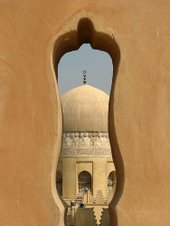
How to stop radical Islamists from taking power

Sunday's New York Times reports:
Every country on the continent’s northern rim, from Egypt to Morocco, has outlawed extreme Islamist parties that would be likely to win large parliamentary blocs — if not majorities — were they allowed to participate in free and fair national elections. (Libya bans political parties altogether.)
But as the Times duly notes:
Each of those countries (again with the exception of Libya, where the small society is tightly controlled) has suffered terrorist attacks from local groups that have emerged from the repressed extremists.
What to do?
Unfortunately, so far no country has been able to find the solution. As the Times writes:
Clearly, the rise of conservative Islam won’t be turned aside by simply banning the veil, as Tunisia tried unsuccessfully to do.
Allowing carefully monitored, government-friendly Islamist parties into the political system hasn’t solved the problem either: neither the Movement for the Society of Peace and the Islamic Renaissance Movement in Algeria, nor the Justice and Development Party in Morocco, have successfully diffused the power of the underground movements.
According to the Times:
[Many] in North Africa’s elite circles of power argue that, given the conservative religiosity sweeping the Muslim world, it is simply too dangerous to allow essentially non-democratic movements to participate in fully democratic elections because they can’t be trusted to respect democratic principles if they come to power.
As the Times observes:
..the circumscribed democracy that exists throughout the region doesn’t only squeeze out Islamists; it prevents more liberal elements of civil society from participating in politics as well. That leaves most people without a political voice, caught between a distant, elitist and often corrupt government and a militant opposition rooted in fundamentalist Islam. Despite the periodic violence, the Islamist movement appears to be gaining ground.How about an economic solution to this problem? Unfortunately, as the Times notes:
Many of the most active militants come from well-to-do families. Tunisia, for example, has a big, home-owning, mortgage-holding middle class but hasn’t escaped radicalism. In contrast to the Western-friendly face presented at North Africa’s tourist hotels, Al Qaeda finds many admirers in its capital’s narrow streets.
Given that none of the obvious solutions seem to work, as the Times reports, it's not surprising some experts are now asking:
What would happen if these governments let down their guard?
John Entelis, a political scientist at Fordham University in New York, argues that the demands of working within a pluralistic system — or the responsibilities of governing if an Islamist party came to power — would force those parties to change.
Let's hope he's right. But there doesn't seem to be much evidence to support this line of thinking - not if you examine how Hamas has handled its political power.





 Posts