Daniel Pearl's parents on Daniel's legacy
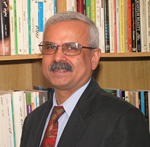
 UCLA’s Judea Pearl, father of slain journalist Daniel, background, works to build Muslim-Jewish relations.
(Stephen Osman / LAT), September 1, 2006
The parents of Daniel Pearl, the Wall Street Journal reporter who was kidnapped while he pursued a story on radical Islam in Pakistan and then beheaded for being Jewish spoke to the Los Angeles Times about what they want people to take away from their son's story, now memorialized in the film "A Mighty Heart" starring Angelina Jolie.
"We are hoping the movie will bring curiosity about Danny," said Judea Pearl, a UCLA professor who started a foundation with his wife to promote greater cultural understanding in the wake of his son's death. "We want people to learn about his legacy. We can't let this happen again."As the Times continued:
As sophisticated people who understand the power of media, they've been searching since their son's death for Hollywood allies who will help them get their message out.Incidentally, Muslims - and non-Muslims too - might check out what Judea Pearl says regarding the future of Islam. In this FrontPageMagazine.com article he addresses those who suggest that Islam itself is the problem, who insist that there can never be such a thing as a good-neighborly Islam.
"I see many celebrities involved in social causes," Judea Pearl said. "Many them are interested in fighting diseases and responding to natural disasters. Very few, perhaps even none, is addressing the tsunami of hatred that has swept our planet in the past decades.
"It's not a fight of medicine. It's a fight of ideology. Of ideals. I wish we could see more interest in that struggle."
The Daniel Pearl Foundation has undertaken several projects, including holding a music day in October with concerts around the globe; offering internships at various U.S. newspapers to foreign journalists, particularly those from South Asia, the Middle East and North Africa; and sponsoring an annual lecture series at UCLA and Stanford to discuss ways to further cultural understanding. . .
"I never let myself think this is a therapy," he said. "If I had known this is a therapy, I would have stopped doing it. I'm doing it because it's effective. We're trying to harness the goodwill and energy to contain the tsunami."
Ruth Pearl says, "I worry about the next generation. If we don't address this now, what will become of us? What will become of our children?





 Posts
Posts