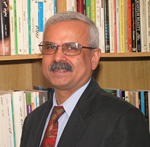
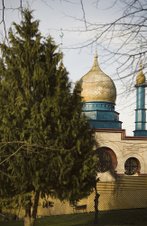
Khalizad at the UN: Will his charm work to win friends and influence enemies?
From today's New York Times profile of the new American ambassador to the United Nations, Zalmay Khalilzad:
As the Times points out, the issues haven't changed so how to explain all the new warm feelings? As Mr. Khalizad told the Times: “I’ve been around long enough to know I should enjoy it while it lasts. Also, maybe they’re thinking, ‘Look at the places this guy has just been, so let’s be nice to him.’”Mr. Khalilzad, the former American ambassador to Afghanistan and Iraq, has been welcomed effusively since his arrival six weeks ago, and one frequently mentioned reason is that he strikes people as so different from John R. Bolton, the combative former American ambassador.
“I’ve heard universally good things about Khalilzad from ambassadors,” said Edward C. Luck, a professor of international affairs at Columbia who has followed the United Nations for more than three decades. “You couldn’t have two more contrasting approaches to the job, and all of them bring up Bolton and say what a welcome relief Khalilzad is to the old approach, which was so much preaching and in your face.”
As the Times report continues:
Mr. Khalilzad, 56, likes to describe himself as a deal maker, a conciliator eager to listen to others and someone respectful of the points of views of small countries. “I am a problem solver,” he said on his first day in office. “I will not posture. . .
“I have tried to develop personal relationships with my colleagues here, I have tried to create a sense of trust, I level with them, I don’t demean them,” he said. “Even if we disagree, we have to do it in a way that is not disagreeable.”
Afghan-born, educated in Lebanon and able to converse in five Central Asian languages, Mr. Khalilzad says his origins, appearance and accented English give him an advantage with the envoys, particularly those from the developing world who eye American policy with such doubt. “The way I look and my background and style resonate with many of them,” he said. “I try to explain to them that I understand their culture and I know where they are coming from, that they are seeing conspiracies where the motives are really innocent. Often when I make a comment like that, they laugh because they can see I have read them correctly.”
And he apparently doesn't confine his diplomacy to foreigners, the Times reports:
Inside the United States mission, the changes appear to be just as dramatic. “Ambassador Khalilzad has a totally different style than Ambassador Bolton,” said an American official who has worked closely with both men but said he could not speak about internal matters for attribution. “Khalilzad is informal, inclusive, not at all hierarchal and secretive the way Bolton was.”
So he's charming. Now how about the results factor? As the Times continues:
In the first major test of his influence this past month, Mr. Khalilzad pushed for a vote on a resolution creating an international tribunal to judge suspects in the assassination of the former Lebanese prime minister, Rafik Hariri, despite warnings that acting now could inflame the already volatile politics of Lebanon.
The measure passed 10 to 0, with five countries abstaining.
He's about to face what the Times characterizes as "the more fraught Kosovo issue." Can he get Russia to agree to Serbian independence? As he told the Times:
“What Churkin [the Russian envoy] has said publicly, and what the discussion between him and me has been, I don’t want to signal an agreement,” he said. “But I also don’t want you to assume that there is no chance of an agreement, that we won’t reach an understanding.”






 Posts
Posts