Iraq: the country of perpetual "sahel"?
A story by Edward Wong in Sunday's New York Times about what seems to be an Iraqi predilection for tyrants and violent endings seems to have generated a lot of buzz.
Some excerpts:
PERHAPS no fact is more revealing about Iraq’s history than this: The Iraqis have a word that means to utterly defeat and humiliate someone by dragging his corpse through the streets.Wong goes on to report:
The word is “sahel,” and it helps explain much of what I have seen in three and a half years of covering the war.
It is a word unique to Iraq, my friend Razzaq explained over tea one afternoon on my final tour. Throughout Iraq’s history, he said, power has changed hands only through extreme violence, when a leader was vanquished absolutely, and his destruction was put on display for all to see.
Most famously it happened to a former prime minister, Nuri al-Said, who tried to flee after a military coup in 1958 by scurrying through eastern Baghdad dressed as a woman. He was shot dead. His body was disinterred and hacked apart, the bits dragged through the streets. In later years, Saddam Hussein and the Baath Party crushed their enemies with the same brand of brutality.
“Other Arabs say, ‘You are the country of sahel,’ ” Razzaq said. “It has always been that way in Iraq.”
But in this war, the moment of sahel has been elusive. No faction — not the Shiite Arabs or Sunni Arabs or Kurds — has been able to secure absolute power, and that has only sharpened the hunger for it.As he goes on to observe:
Caught in the middle of the civil war are the Americans. To Iraq’s factions, they are the weakest of all the armed groups in one crucial respect: their will is ebbing and their time here is limited. That leaves Iraqis more motivated than ever to cling to their weapons, preparing for what many see as an inevitable plunge into the abyss.So how did the Iraqis Wong interviewed think this would all pan out?
“Everyone — the Sunni, the Shia — is playing the waiting game,” an Iraqi leader told me over dinner at his home in the Green Zone. “They’re waiting out the Americans. Everyone is using time against you.”
A Shiite neighborhood leader - and supporter of democracy - seems to have summed up the general sentiment:
“In the history of Iraq, more than 7,000 years, there have always been strong leaders,” he said. “We need strong rulers or dictators like Franco, Hitler, even Mubarak. We need a strong dictator, and a fair one at the same time, to kill all extremists, Sunni and Shiite.”With this, Wong concludes:
I was surprised to hear those words. But perhaps I was being naïve. Looking back on all I have seen of this war, it now seems that the Iraqis have been driving all along for the decisive victory, the act of sahel, the day the bodies will be dragged through the streets.I wonder if Wong's right about this. Are Iraqis really doomed to perpetual sahel? Is it really as bad as Fakhri al-Qaisi, a Sunni Arab dentist in Baghdad, told Wong it is? "We've changed nothing," he was reported as saying. “It’s dark. There will be more blood.”
Maybe this Baghdad dentist should talk to his fellow Sunnis in Anbar Province for a check on another Iraqi reality. While the guys in Anbar haven't had to fight a sectarian war like he perhaps has, they have had to reclaim their territory from no less formidable a foe than Al Qaeda.
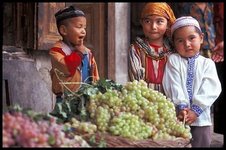
They apparently reached their tipping point when Al Qaeda insisted they would now have to segregate their vegetables by gender or they couldn't sell them in the "Islamic State of Iraq" Al Qaeda had just declared. The Sunni tribes united and in just a few months have succeeded in largely kicking the AQ boys out.
Let's say that for now, I'm an agnostic when it comes to the idea that Iraqi Muslims are doomed to fight perpetual civil war and are only capable of wishing for sahel.




 Posts
Posts